
Home › BRCGS Certification and Training
BRCGS Certification, Standards and Training in South Africa
BRCGS is a globally recognised set of standards used by food manufacturers, packaging suppliers, storage and distribution companies, agents, brokers and consumer product businesses to prove product safety, legality, quality and supply chain control. ASC’s thirteen online courses take your team from what the standard asks for to a site that is ready for its certification audit.
- BRCGS Food Safety Issue 9
- Packaging Materials Issue 7
- Agents and Brokers Issue 3
- Storage and Distribution Issue 4
- Gluten-Free Issue 4
- Plant-Based Issue 1
- Audit grades
- Fundamentals
What your audit grade meansIssue 9
The grade is set by the number and severity of non-conformities raised at the audit.
- AA5 or fewer minors
- A6 to 10 minors
- B11 to 16 minors, or 1 major with up to 10 minors
- C17 to 24 minors, or 1 major with 11 to 16 minors
- D25 to 30 minors, or 1 major with 17 to 24 minors
- NoneAny critical, 31 or more minors, 3 or more majors, or a major against a fundamental
BRCGS training courses, from introduction to implementation
ASC offers BRCGS training across Food Safety Issue 9, Packaging Materials Issue 7, Agents and Brokers Issue 3, Storage and Distribution Issue 4, Gluten-Free Issue 4 and Plant-Based Issue 1. Start with the introduction for your standard, and move to implementation when you are building or running the system.
Prices are in South African rand. The smaller figures under each price are indicative conversions at today’s exchange rate. You pay in rand and your bank sets the final rate.
BRCGS Food Safety Issue 9
For food manufacturers and processors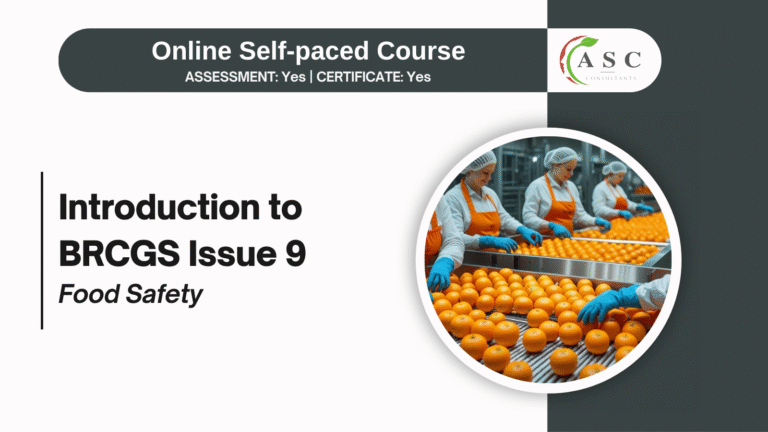
Introduction to BRCGS for Food Safety Issue 9
For QA, QC, HACCP team members, supervisors and internal auditors.
- Food safety management systems
- An overview of the Issue 9 requirements
- The audit protocol and how grading works
R1 195About 8 hours · online
View the course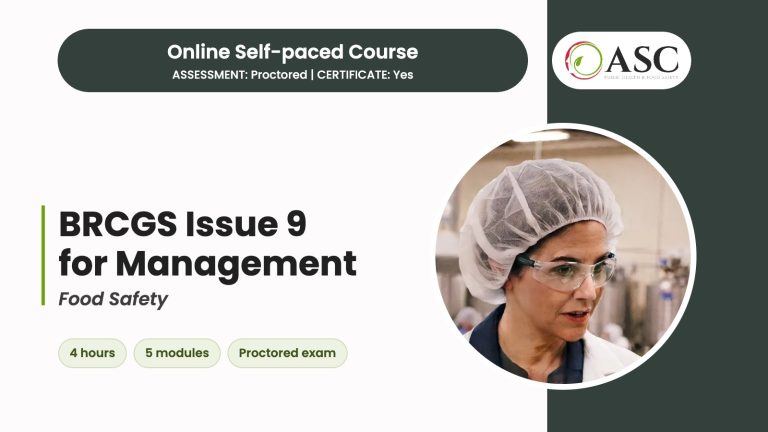
BRCGS Food Safety Issue 9 for Management
For senior managers who sign off the commitment the Standard requires.
- What the Standard expects of management
- Senior management commitment and food safety culture
- The systems you are accountable for
- Audit protocol, non-conformities and grading
R1 195About 4 hours · online
View the course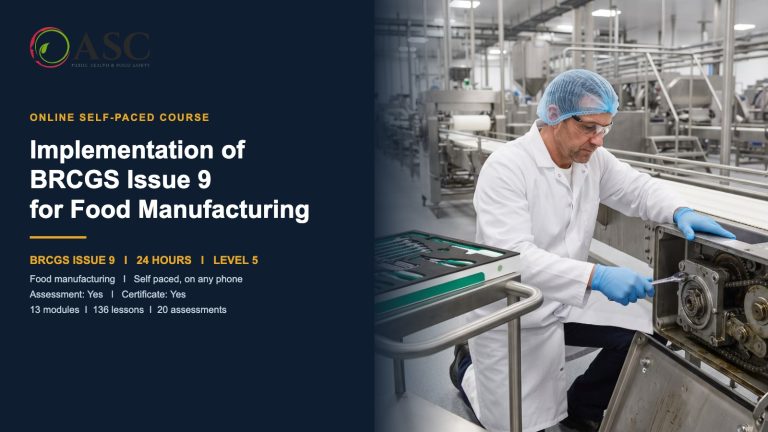
Implementation of BRCGS Issue 9 for Food Manufacturing
For the technical manager and team building or running the system.
- Senior management commitment and culture
- The food safety plan (HACCP) and the quality system
- Site standards, product and process control
- Personnel and production risk zones
R5 500About 24 hours · online
View the courseIssue 9 starter bundle: GMP, HACCP and Introduction to BRCGS
R4 406 instead of R5 875 for three courses, a saving of R1 469.
BRCGS Packaging Materials Issue 7
For packaging manufacturers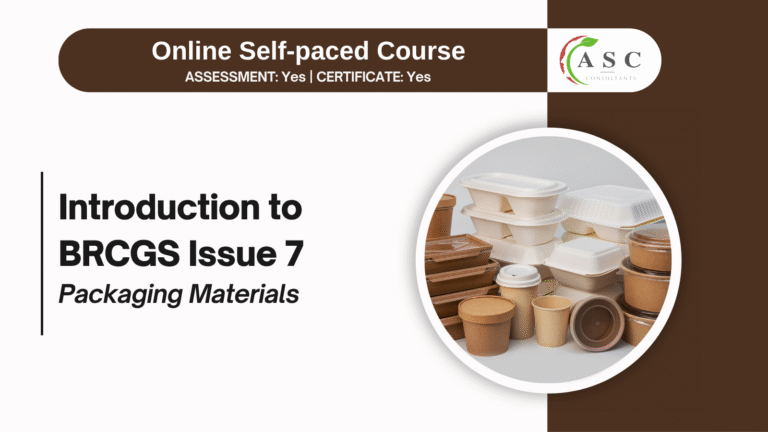
Introduction to BRCGS for Packaging Materials Issue 7
For senior management, QA, QC, HARA teams, supervisors and internal auditors.
- Food safety management system foundations
- An overview of the Issue 7 requirements
- The audit protocol
- Final assessment
R1 195About 13 hours · online
View the course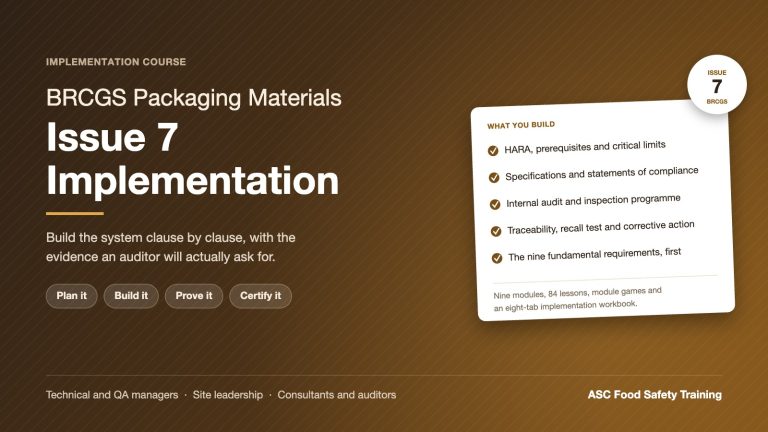
Implementation of BRCGS for Packaging Materials Issue 7
For the team implementing the Standard on a packaging site.
- Scoping, gap analysis and the implementation project
- Senior management commitment and hazard analysis (HARA)
- Site standards, product and process control
- Personnel and full audit preparation
R5 380About 18 hours · online
View the coursePackaging Materials bundle
R5 260 instead of R6 575 for both Issue 7 courses, a saving of R1 315.
BRCGS Agents and Brokers Issue 3
For businesses that trade food or packaging without making or storing it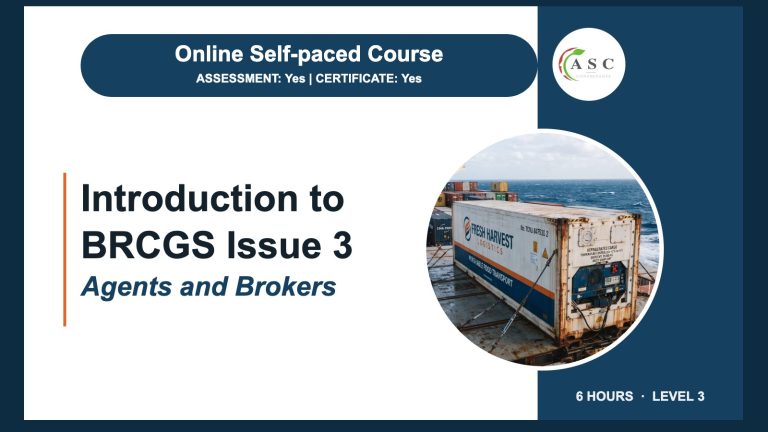
Introduction to BRCGS for Agents and Brokers Issue 3
For traders, importers and brokers approving suppliers they do not control.
- Product safety management for traders
- An overview of the Issue 3 requirements
- Choosing an audit option and the audit protocol
R1 195About 6 hours · online
View the course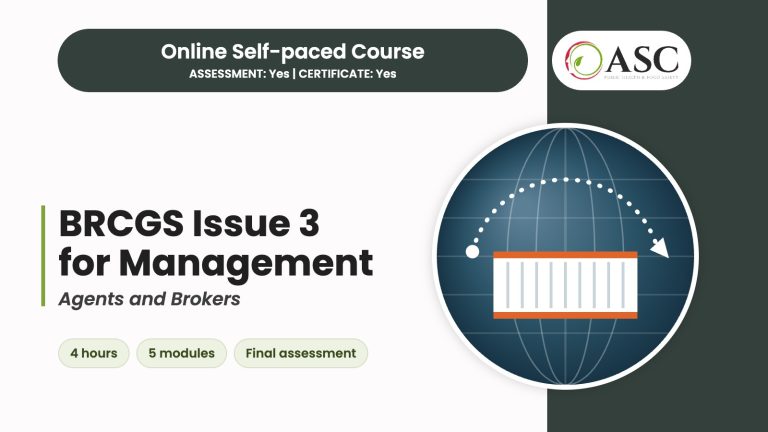
BRCGS Agents and Brokers Issue 3 for Management
For directors and managers who answer for the products their business trades.
- Senior management commitment, culture and review
- Approving suppliers and service providers you never visit
- Recall, the audit grade and the 28-day response
R1 195About 4 hours · online
View the courseBRCGS Storage and Distribution Issue 4
For warehouses, cold stores, logistics and distribution businesses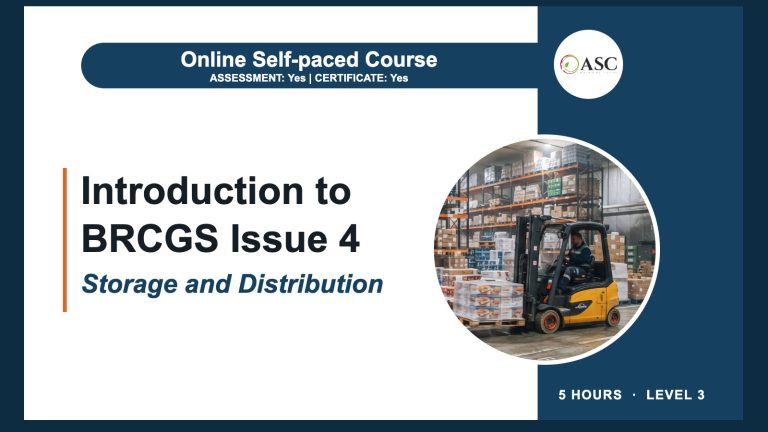
Introduction to BRCGS Storage and Distribution Issue 4
For warehouse, cold store and transport teams keeping products safe in storage and transit.
- Scope, statements of intent and the voluntary modules
- An overview of the Issue 4 requirements
- The certification process and audit
R1 195About 5 hours · online
View the course
BRCGS Storage and Distribution Issue 4 for Management
For directors and managers who answer for the products they store and move.
- Senior management commitment, culture and review
- Hauliers, cold chain and temperature failures
- Recall, unannounced audits and the audit grade
R1 195About 4 hours · online
View the courseBRCGS Gluten-Free Issue 4
For manufacturers that make and label products as gluten-free
Introduction to BRCGS Gluten-Free Issue 4
For manufacturers keeping gluten out of products sold as gluten-free.
- The gluten-free management system and scope
- An overview of the Issue 4 requirements
- The certification process and audit
R1 195About 5 hours · online
View the course
BRCGS Gluten-Free Issue 4 for Management
For directors and managers who answer for the gluten-free claim.
- Management commitment and the gluten-free management system
- Suppliers, oats, labels and the claims you sign off
- Testing, recall, Table 1 findings and keeping the claim
R1 195About 4 hours · online
View the courseBRCGS Plant-Based Issue 1
For manufacturers making plant-based claims on their products
Introduction to BRCGS Plant-Based Issue 1
For plant-based producers keeping animal-origin material out of their products.
- The plant-based management system and scope
- An overview of the Issue 1 requirements
- The certification process and audit
R1 195About 5 hours · online
View the course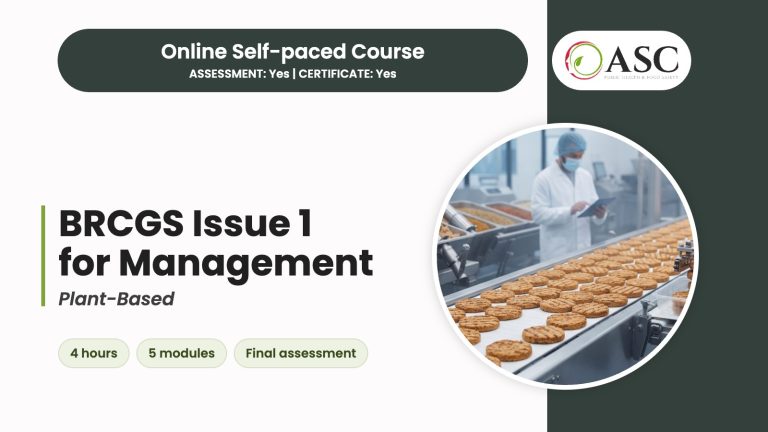
BRCGS Plant-Based Issue 1 for Management
For directors and site managers who answer for the plant-based claim.
- Management commitment and the plant-based management system
- Suppliers, labels and the claims you sign off
- Incidents, the pass-or-fail audit and keeping the mark
R1 195About 4 hours · online
View the courseSupporting courses
The fundamentals lean on skills ASC teaches separately: HACCP, internal and supplier auditing, root cause analysis for corrective action, allergen management, labelling and pack control, food safety culture and food fraud and food defence.
| Your role | Start with | Then add |
|---|---|---|
| Senior managers at a food site | Issue 9 for Management | Food safety culture training |
| Technical and QA managers building the system | Introduction to Issue 9 | Implementation of Issue 9 |
| HACCP team members, QC and supervisors | The Issue 9 starter bundle | Internal auditing |
| Packaging site managers and QA | Introduction to Packaging Issue 7 | Implementation of Packaging Issue 7 |
| Agents, brokers and importers | Introduction to Agents and Brokers Issue 3 | Supplier auditing |
| Directors and managers of trading, import and brokerage businesses | Agents and Brokers Issue 3 for Management | Introduction to Agents and Brokers Issue 3 |
| Warehouse, cold store and distribution teams | Introduction to Storage and Distribution Issue 4 | Internal auditing |
| Directors and managers of warehousing, cold chain and distribution businesses | Storage and Distribution Issue 4 for Management | Introduction to Storage and Distribution Issue 4 |
| Manufacturers making gluten-free claims, QA and production teams | Introduction to Gluten-Free Issue 4 | Allergen management training |
| Directors and managers of sites making gluten-free claims | Gluten-Free Issue 4 for Management | Introduction to Gluten-Free Issue 4 |
| Plant-based product makers, QA and production teams | Introduction to Plant-Based Issue 1 | Allergen management training |
| Directors and managers of plant-based sites | Plant-Based Issue 1 for Management | Introduction to Plant-Based Issue 1 |
What is BRCGS?
BRCGS, formerly the British Retail Consortium Global Standards, is a globally recognised certification scheme that helps organisations show that their products are safe, legal, of the right quality and made under controlled conditions. Retailers, brand owners, importers, exporters and large customers often require it as part of supplier approval.
BRCGS Food Safety
For food manufacturers and processors. Issue 9 covers senior management commitment, the HACCP-based food safety plan, site standards, product and process control and personnel.
BRCGS Packaging Materials
For manufacturers of packaging for food, beverage and consumer goods. Issue 7 uses hazard analysis and risk assessment (HARA) and hygiene categories.
BRCGS Agents and Brokers
For companies that buy, sell or arrange trade without manufacturing or storing the product: supplier approval, legality, traceability and specifications.
BRCGS Storage and Distribution
For warehouses, logistics and distribution businesses: storage and distribution controls, traceability, hygiene and handling.
BRCGS Consumer Products
For non-food consumer products and their supply chains: risk-based controls, specification management and product integrity.
Additional BRCGS programmes
Programmes linked to claims and specific product requirements, such as Gluten-Free and Plant-Based certification and ethical trade, depending on market and customer needs.
In simple terms: BRCGS gives a business a structured way to prove that its product safety and quality systems are controlled, documented, independently audited and continually improved.
The twelve fundamental requirements of BRCGS Food Safety Issue 9
A major non-conformity against any one of these means certification is not granted at that audit, whatever the rest of the score. They are where most implementation effort, and most audit preparation, should go.
- 1.1Senior management commitment and continual improvement
- 2The food safety plan (HACCP)
- 3.4Internal audits
- 3.5.1Management of suppliers of raw materials and packaging
- 3.7Corrective and preventive actions
- 3.9Traceability
- 4.3Layout, product flow and segregation
- 4.11Housekeeping and hygiene
- 5.3Management of allergens
- 6.1Control of operations
- 6.2Labelling and pack control
- 7.1Training
Work out your BRCGS audit grade
Enter the non-conformities from an audit or a mock audit. The grade follows the Issue 9 grading rules: count the majors first, then the minors.
| Grade | No majors | 1 major | 2 majors |
|---|---|---|---|
| AA | 5 or fewer minors | Not possible | Not possible |
| A | 6 to 10 minors | Not possible | Not possible |
| B | 11 to 16 minors | Up to 10 minors | Not possible |
| C | 17 to 24 minors | 11 to 16 minors | Up to 10 minors |
| D | 25 to 30 minors | 17 to 24 minors | 11 to 16 minors |
| No certificate | 31 or more minors | 25 or more minors | 17 or more minors |
Any critical non-conformity, three or more majors, or a major against a fundamental requirement means no certificate at that audit. A plus (for example AA+) marks an unannounced audit, with the same thresholds.
What is BRCGS for Packaging Materials Issue 7?
BRCGS for Packaging Materials Issue 7 is a product safety and quality standard for organisations that make packaging used for food, beverage, consumer goods and other supply chains. Packaging is part of the product safety chain: poorly controlled packaging can affect food safety, quality, legality and brand protection.
- Hazard analysis and risk assessment (HARA) to identify and control product safety risks
- Product safety and quality management, specifications and traceability
- Site standards, housekeeping, hygiene and product and process control
- Personnel, training and requirements for traded products
Position statement P708
- Effective for Issue 7 audits on or after 10 August 2026
- Clause 4.4.1: training for the people who carry out the threat assessment and write the product defence plan
- Clause 4.8.2: cleaning procedures must consider disinfection where appropriate, and include validation as well as verification
How BRCGS certification usually works
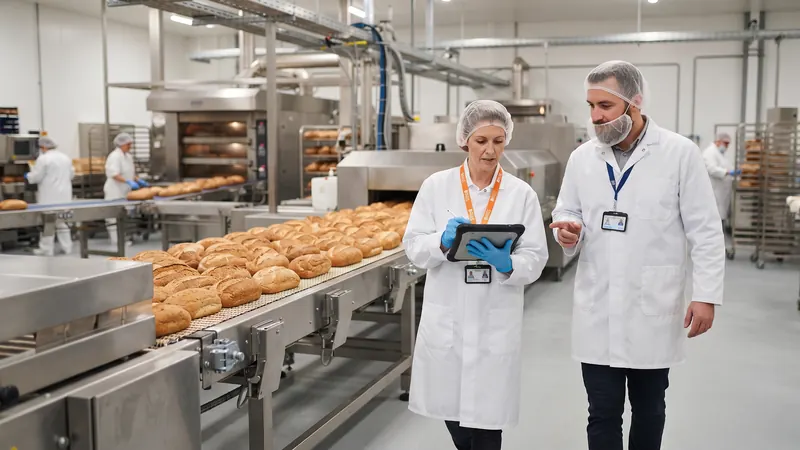
BRCGS certification follows a structured path: understand the requirements, implement the controls, audit the system and keep it running.
- Understand the standardIdentify which BRCGS standard applies to your operation and its requirement areas.
- Gap assessmentCompare current systems, procedures and site practice against the requirements.
- Implement controlsBuild procedures, records, risk assessments, training and verification.
- Internal auditsCheck that the system is implemented, effective and ready.
- Certification auditAn approved certification body audits the site against the standard.
- Corrective actionsClose non-conformities with root cause analysis and evidence.
- Certification decisionThe certificate is issued under the scheme rules and the audit grade.
- Maintain the systemOngoing monitoring, training, review, internal audits and improvement.
Understanding the difference between BRCGS training and consulting
Training helps your team understand the requirements. Consulting helps your business implement, verify and prepare the system for audit.
| Need | ASC online training | ASC Food Safety Consultants |
|---|---|---|
| Understand what BRCGS requires | Yes, through the online courses | Leadership briefings and project planning |
| Team training on a specific standard | Thirteen self-paced courses | Customised team workshops |
| Gap assessment | Taught in the implementation courses | Available as consulting support |
| Documentation and system development | Explains the requirements | Implementation documents and controls |
| Internal audits and audit preparation | Builds awareness and skill | Audits, readiness reviews and corrective actions |
| Certificate | Certificate of completion for each course | Deliverables depend on project scope |
For gap assessments, implementation, internal audits or non-conformity closure, talk to ASC Food Safety Consultants or see the consulting services.
Who should understand BRCGS requirements?
Food manufacturers and processors
Sites producing food that need recognised food safety and quality certification.
Packaging material manufacturers
Businesses supplying packaging to food, beverage and consumer product supply chains.
Storage and distribution providers
Warehouses, logistics providers and distributors responsible for controlled handling.
Agents and brokers
Companies that buy, sell or arrange trade in products they do not manufacture.
QA, QC and compliance teams
Teams responsible for specifications, audits, risk assessment, documents and verification.
Managers, supervisors and internal auditors
Leaders and auditors who need to know the requirements and the evidence behind them.
BRCGS guides
BRCGS certification and training FAQs
What is BRCGS?
BRCGS is a globally recognised set of standards used to help organisations demonstrate product safety, legality, quality and operational control across food, packaging, storage, distribution and consumer product supply chains.
What does BRCGS stand for?
BRCGS stands for Brand Reputation through Compliance Global Standards. It evolved from the British Retail Consortium standards and is widely used for certification and supply chain assurance.
Why is BRCGS certification important?
BRCGS certification helps businesses demonstrate that recognised product safety, legality, quality and management system controls have been implemented and independently audited. Retailers, brand owners and export customers often make it a condition of supplier approval.
Which businesses need BRCGS certification?
BRCGS may be required by food manufacturers, packaging suppliers, storage and distribution providers, agents, brokers and consumer product businesses, depending on customer, retailer, export or supply chain requirements.
What are the main BRCGS standards?
The main BRCGS standards are Food Safety, Packaging Materials, Storage and Distribution, Agents and Brokers and Consumer Products, with further programmes such as Gluten-Free and Plant-Based certification.
What are the twelve fundamental requirements in BRCGS Issue 9?
They are 1.1 senior management commitment and continual improvement, 2 the food safety plan (HACCP), 3.4 internal audits, 3.5.1 management of suppliers of raw materials and packaging, 3.7 corrective and preventive actions, 3.9 traceability, 4.3 layout, product flow and segregation, 4.11 housekeeping and hygiene, 5.3 management of allergens, 6.1 control of operations, 6.2 labelling and pack control, and 7.1 training. A major against any one means certification is not granted at that audit.
What do the BRCGS audit grades AA, A, B, C and D mean?
They record how many non-conformities were raised at the audit. AA is 5 or fewer minors, A is 6 to 10, B is 11 to 16 or one major with 10 or fewer minors, C is 17 to 24 or one major with 11 to 16, and D is 25 to 30 or one major with 17 to 24. Any critical, 31 or more minors or three or more majors means no certificate. A plus, such as AA+, means the audit was unannounced.
How long does BRCGS Issue 9 implementation take?
A site starting from nothing usually needs 8 to 12 months, because the fundamentals need months of internal audit, corrective action, traceability and management review records behind them. A site moving from FSSC 22000, IFS or SQF usually needs 4 to 6 months.
What is BRCGS for Packaging Materials Issue 7?
BRCGS for Packaging Materials Issue 7 is a standard for packaging material manufacturers. It focuses on product safety, quality management, site standards, hazard analysis and risk assessment, process control and personnel. Position statement P708 amends clauses 4.4.1 and 4.8.2 for audits on or after 10 August 2026.
Is BRCGS recognised internationally?
Yes. BRCGS standards are recognised internationally and are commonly used by retailers, brand owners, customers, importers, exporters and certification bodies as part of supplier assurance.
How do you prepare for a BRCGS audit?
Preparation usually includes understanding the standard, conducting a gap assessment, implementing controls, training staff, completing internal audits, correcting non-conformities and making sure records and evidence are audit-ready. Start the systems that run on calendar time first: internal audits, corrective actions, supplier approval, traceability tests and management review.
Does ASC offer BRCGS training?
Yes. ASC offers thirteen online, self-paced BRCGS courses: Introduction to BRCGS for Food Safety Issue 9, BRCGS Food Safety Issue 9 for Management, Implementation of BRCGS Issue 9 for Food Manufacturing, Introduction to BRCGS for Packaging Materials Issue 7, Implementation of BRCGS for Packaging Materials Issue 7, Introduction to BRCGS for Agents and Brokers Issue 3, BRCGS Agents and Brokers Issue 3 for Management, Introduction to BRCGS Storage and Distribution Issue 4, BRCGS Storage and Distribution Issue 4 for Management, Introduction to BRCGS Gluten-Free Issue 4, BRCGS Gluten-Free Issue 4 for Management, Introduction to BRCGS Plant-Based Issue 1, and BRCGS Plant-Based Issue 1 for Management.
Can ASC help with BRCGS implementation?
Yes. ASC Food Safety Consultants can assist with BRCGS gap assessments, implementation, documentation, internal audits, audit preparation and corrective action support through the main consulting website, ascfoodsafety.com.
Can I take the BRCGS courses outside South Africa?
Yes. BRCGS is an international scheme and the courses are online, self-paced and in English, so they suit sites and teams in any country. Prices are in rand, with indicative conversions shown on this page.
Understand BRCGS standards and prepare your team for stronger certification readiness
Learn what BRCGS is, why certification matters, how the standards apply across food and packaging supply chains, and how ASC can support your training and audit preparation.
- Choose your standardFood Safety Issue 9, Packaging Materials Issue 7, Agents and Brokers Issue 3, Storage and Distribution Issue 4, Gluten-Free Issue 4 or Plant-Based Issue 1.
- Enrol onlinePay in rand and start straight away from any device.
- Learn at your paceLessons, knowledge tests and a final assessment.
- Download your certificateTraining evidence for your records and your audit.
ascfoodsafetytraining.com is ASC's online training website for courses, assessments and certificates. For consulting, FSMS implementation and document support, visit our main website ascfoodsafety.com. Browse all ASC food safety courses.