
Good Manufacturing Practices · Prerequisite programmes
Online Good Manufacturing Practices (GMP) training, from the floor up.
Most audit findings are not about the HACCP plan. They are about a cracked floor tile, a cleaning record signed before the shift ended, or a crate of blue plastic that three people walked past. ASC has two online GMP courses: one for the people who build and run the prerequisite programmes, and one for the people who make them work every shift.
Why GMP, when you already have HACCP
The HACCP plan was fine. The floor was not.
GMP is the ordinary work that keeps a food site under control. The standards call it prerequisite programmes, and HACCP only works on top of them. When the foundation is weak, the hazards land on the critical control points instead. That is why an auditor spends the first hour on the floor, not in the HACCP file.
Taught in Module 1 of GMP for Food Handlers
The five P’s of GMP.
People
Hand washing, clothing, health and behaviour of everyone who enters a food area, visitors included.
Premises
A building, layout and equipment that can be kept clean, and defects reported before they become findings.
Processes
Cleaning, temperature control and product flow that keep raw and ready to eat apart.
Products
Receiving, storage, labels, hold and release, and a trace one step back and one step forward.
Procedures
Written instructions people can follow, and honest records that prove the work was done.
The two courses
One to build the programmes. One for the people who make them work.

Implementation of Good Manufacturing Practices
For QA and QC managers, HACCP teams, supervisors, auditors and the managers who answer for the site’s prerequisite programmes. Based on SANS 10049:2019.
- GMP as part of a food safety system6 lessons
- Personal hygiene, health and presentation3 lessons
- Supplier quality assurance and quality systems7 lessons
- Cleaning and sanitising, including CIP and COP3 lessons
- The Acts that regulate food production3 lessons
- GMP assignment and final assessmentAssessed

GMP for Food Handlers
For production staff, packers, cooks, cleaners, storemen, dispatch staff and drivers. 39 lessons on any phone, a scenario game in every module. Based on R638 and SANS 10049.
- GMP and you5 lessons
- Personal hygiene, health and behaviour6 lessons
- Premises, equipment and workflow5 lessons
- Cleaning and sanitising6 lessons
- Keeping contamination out6 lessons
- Handling the product6 lessons
- Records, the law and food safety culture5 lessons
What good looks like
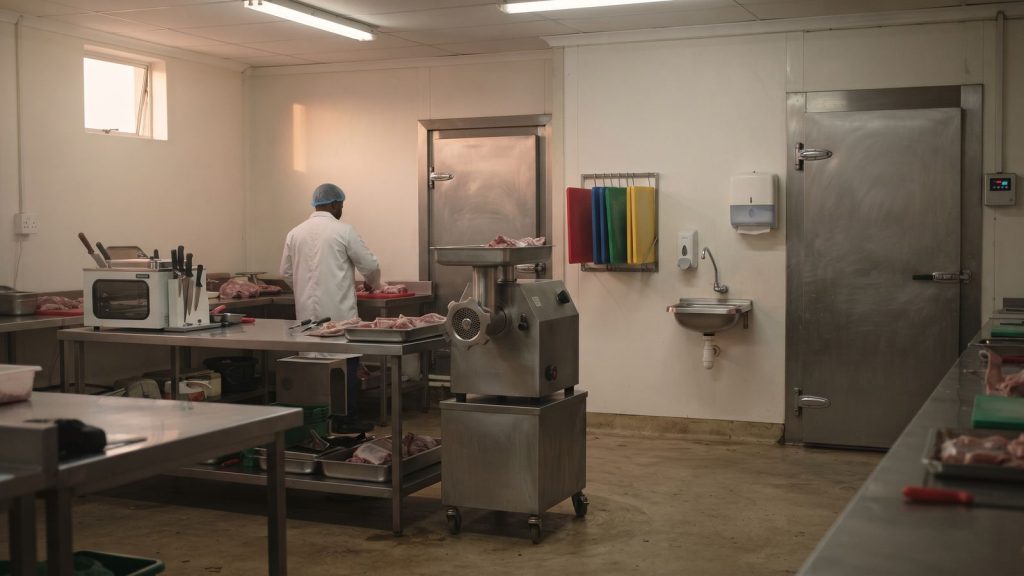
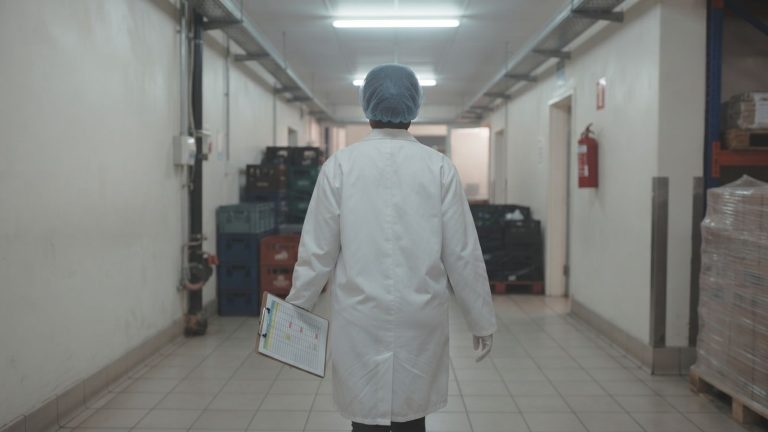
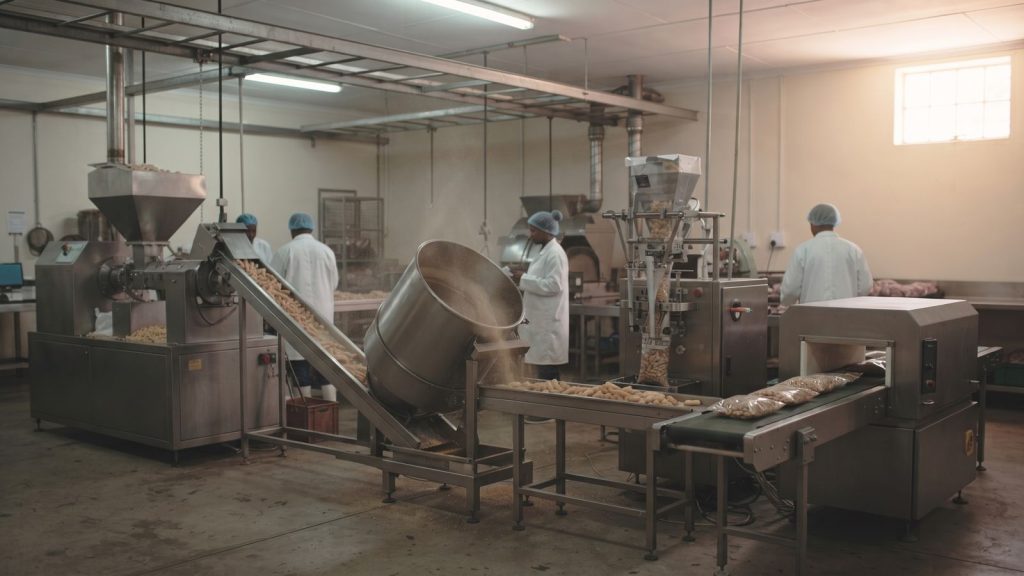
GMP you can see from the walkway.
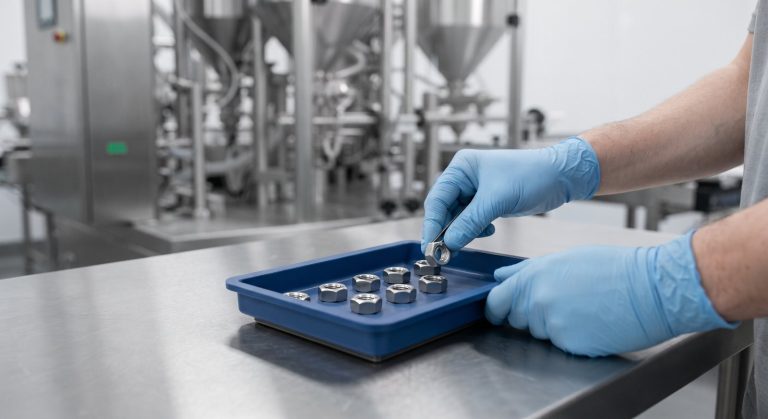
From Module 4: cleaning and sanitising
Clean in the right order, or the sanitiser does nothing.
- 1PrepareStop, isolate and remove product and packaging
- 2Dry cleanScrape and sweep off the loose soil
- 3Pre-rinseRinse from top to bottom
- 4DetergentRight strength, right contact time, scrub
- 5RinseRemove detergent and loosened soil
- 6SanitiseApply and leave for the contact time
- 7Check and recordLook, swab where required, sign honestly
What auditors find
Where GMP findings come from on a real site.
These are the six areas where the findings usually sit. The food handler course covers each one on the floor. The Implementation course covers the programmes behind them.
The building
Cracked floors, gaps under doors, flaking paint and condensation above an open line.
Equipment
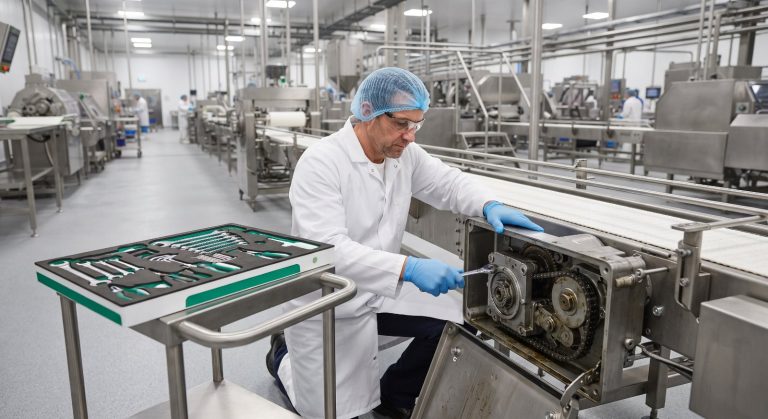
Tape as a permanent repair, tools left on the line, no hygiene clearance after a breakdown.
Cleaning
A schedule without method, chemical or frequency, and records signed before the work.
Personal hygiene
Jewellery, uncovered hair, gloves from raw to cooked, basins without soap or towels.
Pests and waste
Bait stations missing from the map, open bins in production, drains nobody cleaned.
Suppliers and storage
Unapproved suppliers, stock on the floor, and no trace one step back.
Which course do I need?
Find yourself in the left column.
Usually the QA team and supervisors do the Implementation course, and everyone on the floor does the food handler course. For five or more learners, ask for a group arrangement.
KFC team members trained through ASC. Group managers track every learner’s progress and certificate on the ASC manager dashboard.
| If this is you | The course | Price |
|---|---|---|
| I work on the line, pack, cook, clean, store or deliver food | Food Handlers | R1 195 |
| I start in a food business soon and need the rules before my first shift | Food Handlers | R1 195 |
| I lead a shift and have to enforce the hygiene rules | Food Handlers, and Implementation if you also write the procedures | R1 195 |
| I write or verify the cleaning, hygiene, pest or supplier programmes | Implementation | R1 950 |
| I am on the HACCP team and our prerequisites keep failing audit | Implementation | R1 950 |
| I audit suppliers or run internal audits | Implementation | R1 950 |
| We are preparing for FSSC 22000, ISO 22000 or BRCGS | A bundle: GMP, HACCP and the introduction to your standard | Bundle price |
| We are a whole site | Food Handlers for the floor, Implementation for QA and supervisors | Group quote |
Working towards certification
GMP is the first course in three bundles.
GMP, HACCP and Introduction to FSSC 22000
The prerequisites, the HACCP study, then the scheme itself.
See the bundle →GMP, HACCP and Introduction to ISO 22000
The same foundation, then the ISO 22000 management system clauses.
See the bundle →GMP, HACCP and Introduction to BRCGS Issue 9
For a site supplying a retailer that asks for BRCGS Food Safety Issue 9.
See the bundle →Free reading
Three guides, free whether or not you buy a course.
What auditors check before your HACCP plan
The 2025 ISO 22002 changes, and how it maps to R638.
Read the guide →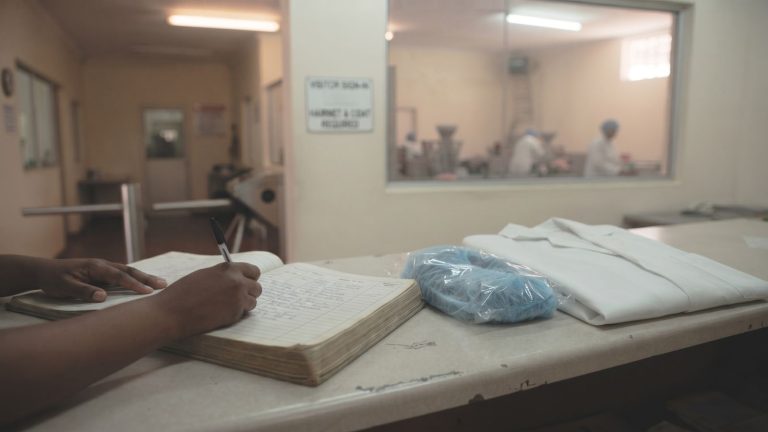
Questions auditors ask food handlers
The twelve questions, what each really checks, and how to prepare without a script.
Read the questions →
The records an inspector asks for
The full register, how long to keep each record, and the seven ways files fail.
Read the register →Questions people ask
Before you enrol.
Still unsure which course fits? A person answers WhatsApp during office hours.
What is the difference between GMP, prerequisite programmes and HACCP?
They are two layers of the same system. GMP and prerequisite programmes (PRPs) are the general conditions that keep a site under control every day: the building, equipment, cleaning, personal hygiene, pests, waste, water, storage and suppliers. HACCP then finds the few significant hazards that remain at specific steps and controls them. If the prerequisites are weak, hazards that good hygiene should have removed end up at the critical control points, and the HACCP plan carries risk it was never designed to carry.
Which GMP course do I need?
If you touch the food, the equipment or the building every shift, GMP for Food Handlers, R1 195. If you write, run, verify or audit the programmes, Implementation of Good Manufacturing Practices, R1 950. On most sites the QA team and supervisors do the Implementation course and everyone on the floor does the food handler course.
Do we need GMP in place before HACCP, FSSC 22000, BRCGS or ISO 22000?
Yes. FSSC 22000, BRCGS and ISO 22000 all require prerequisite programmes as an auditable part of the system, and a HACCP plan assumes they already work. That is why GMP is the first course in the ASC introduction bundles for each of those standards.
Is GMP training a requirement under R638?
R638 sets the hygiene requirements for food premises and for the people who handle food, and GMP is how a site meets them day to day. The GMP for Food Handlers course is based on R638 of 2018 and supports the training requirement in Regulation 10(1)(b). For the person in charge and the Certificate of Acceptability, see the ASC R638 training page.
Does this apply outside South Africa?
Yes. The prerequisite programmes are the same ones set out in the Codex General Principles of Food Hygiene and in the ISO 22002 series that FSSC 22000 uses. The legislation module in the Implementation course and the R638 references are South African. Everything else applies on any food site, and both courses are taught in English. Prices are in South African rand.
Do I need to work in a food business to do the course?
Not for the food handler course. It has no prerequisites, every term is explained the first time it is used, and the activities run on a built in case study, Siyakha Foods.
What certificate do I get?
A Certificate of Achievement from ASC. It is released once every knowledge check and the final assessment are passed, and on the food handler course every scenario game as well. The Implementation course also includes a GMP assignment.
Is ASC an accredited training provider?
ASC is a FoodBev SETA accredited provider (587/00337/1900) and a SAATCA registered online training provider (TC No. 065). Both GMP courses are HPCSA CPD accredited.

Who writes the courses
Written by practitioners who audit prerequisite programmes.
The GMP courses are led by Mthokozisi Nkosi, founder of ASC and an HPCSA-registered Environmental Health Practitioner, with ASC trainers and subject experts who implement and audit food safety systems. After GMP, the next step is usually HACCP training. If the building or equipment is the problem, see hygienic design. For the Certificate of Acceptability, see R638 training.
Pick your course, or tell us about your team.
Implementation of GMP R1 950. GMP for Food Handlers R1 195. Group quotes within one working day, and a person answers WhatsApp during office hours.