
Home › FSSC 22000 V7 Training
FSSC 22000 Version 7 Training Courses
Understand FSSC 22000 Version 7 with practical, self-paced online training from ASC. Implement the full scheme on a food manufacturing site, get your team up to speed with the Introduction course, move from Version 6 with the Transition course, or certify in catering, packaging, transport, feed or retail with a sector pathway.
- ISO 22000:2018
- ISO 22002-100:2025
- FSSC V7 additional requirements
- Sector pathways
- Downloadable certificate
What an FSSC 22000 audit is conducted against
- FSSC 22000 additional requirementsScheme requirements such as food defence, food fraud, allergens, environmental monitoring and food safety cultureScheme
- Sector PRP standardFor food manufacturing, ISO 22002-1:2025. Other categories have their own partSector
- ISO 22002-100:2025The common prerequisite programme baseline for food, feed and packagingPRPs
- ISO 22000:2018The food safety management system: clauses 4 to 10FSMS
Choose your FSSC 22000 Version 7 training pathway
Every course is online, self-paced, mobile-friendly and built for real food safety management systems. Pick by what you need to do: implement, understand, transition or certify in a sector.
Prices are in South African rand. The smaller figures under each price are indicative conversions at today’s exchange rate. You pay in rand and your bank sets the final rate.
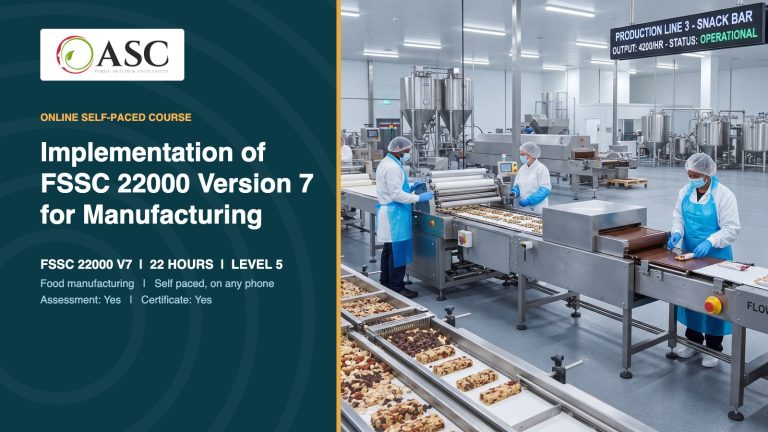
Implementation of FSSC 22000 Version 7 for Food Manufacturing
The whole implementation programme in one course, replacing the old four-course bundle. It needs no prerequisites.
- FSSC 22000 V7.0 Parts 1 to 5
- ISO 22000:2018
- PRPs to ISO 22002-100:2025 and 22002-1:2025
- Hazard analysis, CCPs and OPRPs
- All 18 additional requirements
- 8 modules, 88 lessons, 21 quizzes
- Graded final assessment
- PRP factory walk, hazard analysis tool and a 177-requirement gap assessment
R5 500About 22 hours · online
Go to the courseUnderstand the scheme or move from Version 6
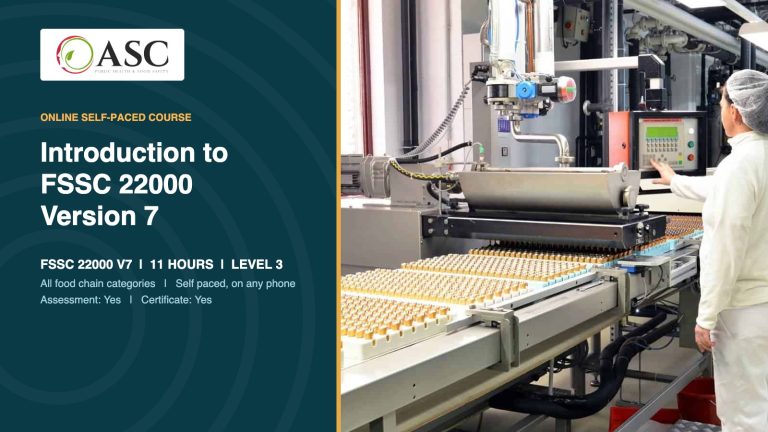
Introduction to FSSC 22000 V7 (All Food Chain Categories)
For QA, QC, HACCP teams, supervisors, managers and internal auditors new to Version 7.
- ISO 22000:2018 and how the scheme is built
- ISO 22002-100:2025 prerequisite programmes
- The FSSC 22000 V7 additional requirements
- Knowledge tests and certificate
R1 750About 11 hours · online
View the course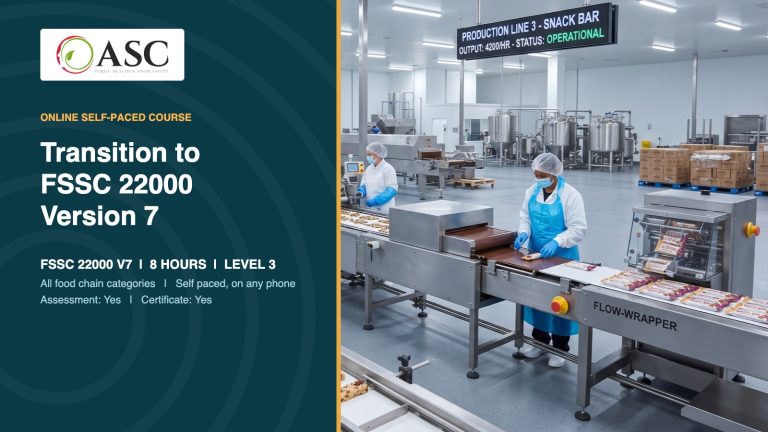
Transition to FSSC 22000 Version 7 (All Food Chain Categories)
For certified sites, food safety leaders, auditors and consultants moving from Version 6.
- What changed from Version 6 to Version 7
- Scheme structure and category changes
- ISO 22002-100:2025 and the new PRP baseline
- Additional requirement changes
R1 450About 8 hours · online
View the course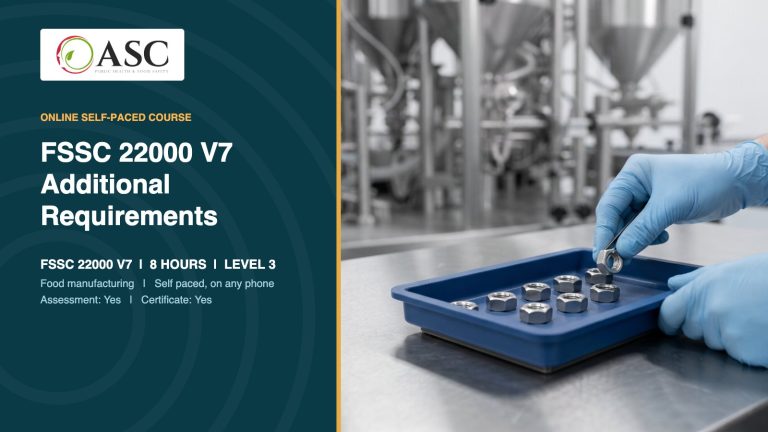
FSSC 22000 V7 Additional Requirements for Food Manufacturing
For the people who own food defence, food fraud, allergens, environmental monitoring and culture.
- Services and purchased materials
- Food defence and food fraud
- Allergens, labelling and environmental monitoring
- Food safety culture and quality control
R1 195About 8 hours · online
View the courseIntroduction to FSSC 22000 bundle: GMP, HACCP and FSSC 22000 V7
R4 823 instead of R6 430 for three courses, a saving of R1 607.
Certifying outside food manufacturing
Five sectors are audited against their own sector documents, so each has its own course. Each one is complete on its own: ISO 22000:2018, the ISO 22002-100:2025 prerequisite programmes, the sector PRP standard and the FSSC additional requirements are all inside the single course, for R5 500. There is nothing to buy first.
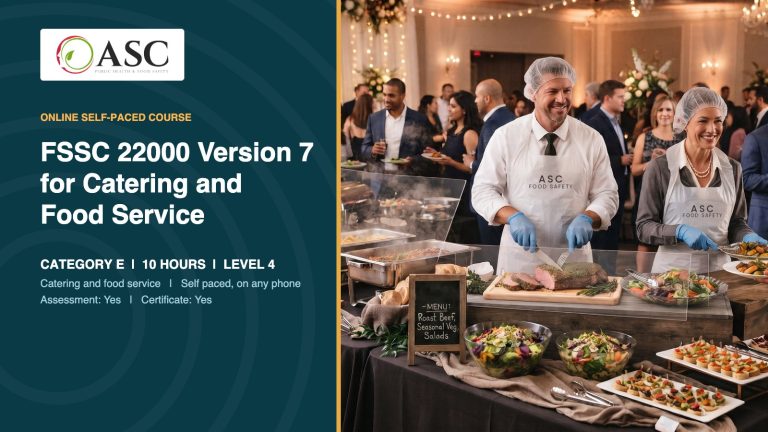
FSSC 22000 Version 7 for Catering and Food Service
For caterers, hotels, hospitals, canteens and food service kitchens.
- Category E and what the audit is conducted against
- ISO 22002-2:2025, the catering layer
- The additional requirements at category E scope
- Turning it into audit evidence
R5 500About 10 hours · online · no prerequisites: the standard and the prerequisite programmes are included
View the course
FSSC 22000 Version 7 for Food and Feed Packaging Manufacturing
For converters and manufacturers of food and feed packaging.
- Category I and what the audit is conducted against
- ISO 22002-4:2025, the packaging layer
- The additional requirements at category I scope
- Turning it into audit evidence
R5 500About 10 hours · online · no prerequisites: the standard and the prerequisite programmes are included
View the course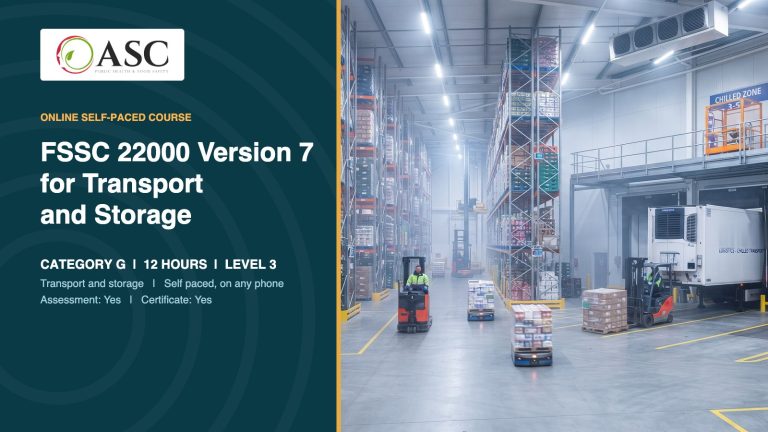
FSSC 22000 Version 7 for Transport and Storage
For cold stores, warehouses, distribution centres and hauliers.
- Category G and what the audit is conducted against
- ISO 22002-5:2025, the transport and storage layer
- The additional requirements at category G scope
- Turning it into audit evidence
R5 500About 12 hours · online · no prerequisites: the standard and the prerequisite programmes are included
View the course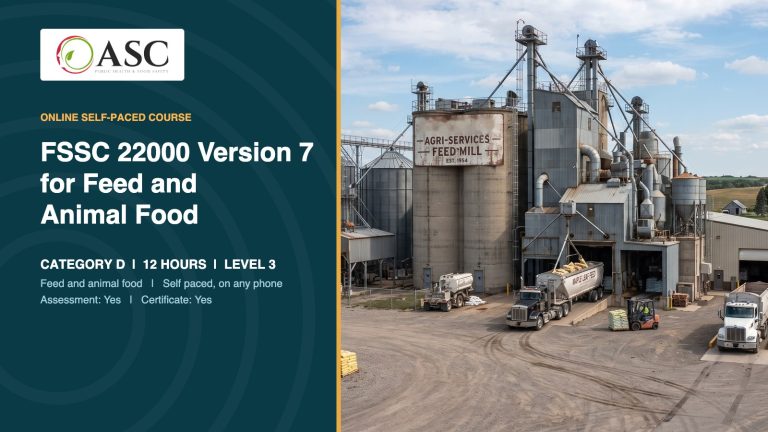
FSSC 22000 Version 7 for Feed and Animal Food Production
For feed mills and manufacturers of animal food.
- Category D and what the audit is conducted against
- ISO 22002-6:2025, the feed layer
- The additional requirements at category D scope
- Turning it into audit evidence
R5 500About 12 hours · online · no prerequisites: the standard and the prerequisite programmes are included
View the course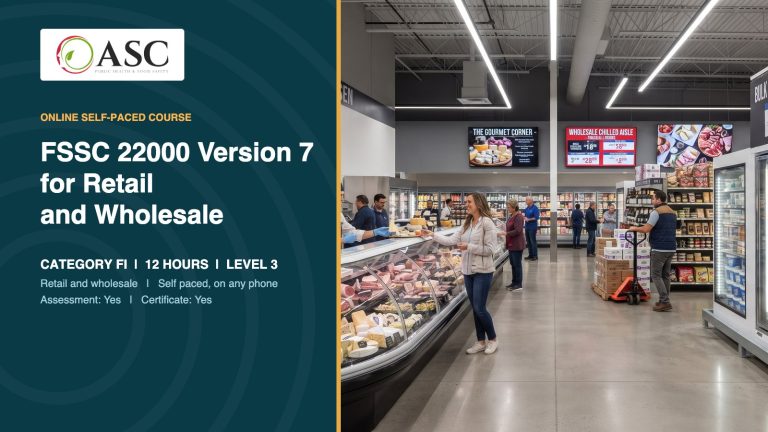
FSSC 22000 Version 7 for Retail and Wholesale
For supermarkets, wholesalers and retail distribution.
- Subcategory FI and what the audit is conducted against
- ISO 22002-7:2025, the retail layer
- The additional requirements at subcategory FI scope
- Turning it into audit evidence
R5 500About 12 hours · online · no prerequisites: the standard and the prerequisite programmes are included
View the courseNo prerequisites on the sector courses. Each sector course is now self-contained: Implementation of ISO 22000:2018, the ISO 22002-100:2025 prerequisite programmes, the sector part and the FSSC 22000 Version 7 additional requirements are all taught inside the single enrolment, so you can start the day you enrol. The food manufacturing implementation course works the same way.
| Your situation | Take |
|---|---|
| Implementing FSSC 22000 V7 on a food manufacturing site | Implementation of FSSC 22000 Version 7 for Food Manufacturing |
| New to FSSC 22000 and need the full picture | Introduction to FSSC 22000 V7, or the Introduction bundle with GMP and HACCP |
| Certified to Version 6 and upgrading | Transition to FSSC 22000 Version 7 |
| Owning food defence, food fraud, allergens or culture | FSSC 22000 V7 Additional Requirements for Food Manufacturing |
| Catering, packaging, transport, feed or retail site | The FSSC 22000 V7 course for your sector, complete on its own |
Looking for ISO 22000 or the ISO 22002 prerequisite programme standards on their own? See the ISO 22000 training page. Training a whole team or several sites? Talk to ASC about group enrolment.
What is FSSC 22000 Version 7?
FSSC 22000 is a GFSI-recognised food safety management system certification scheme. It combines the management system requirements of ISO 22000:2018, a sector prerequisite programme standard from the ISO 22002 series, and the FSSC 22000 additional requirements. Version 7 was published in May 2026. In plain English, it is not a checklist: it is a structured system that controls hazards, strengthens food safety culture, manages suppliers, verifies PRPs and prepares a site for its certification audit.
| Food chain category | Documents the audit is conducted against |
|---|---|
| C · Food manufacturing | ISO 22000:2018, ISO 22002-100:2025, ISO 22002-1:2025 and the FSSC 22000 additional requirements |
| E · Catering and food service | ISO 22000:2018, ISO 22002-100:2025, ISO 22002-2:2025 and the additional requirements |
| I · Packaging manufacturing | ISO 22000:2018, ISO 22002-100:2025, ISO 22002-4:2025 and the additional requirements |
| G · Transport and storage | ISO 22000:2018, ISO 22002-100:2025, ISO 22002-5:2025 and the additional requirements |
| D · Feed and animal food | ISO 22000:2018, ISO 22002-100:2025, ISO 22002-6:2025 and the additional requirements |
| FI · Retail and wholesale | ISO 22000:2018, ISO 22002-100:2025, ISO 22002-7:2025 and the additional requirements |
| FII · Brokering and trading | ISO 22000:2018 and the additional requirements only, with no prerequisite programme standard |
For food manufacturing you need both ISO 22002-100:2025 and ISO 22002-1:2025: the sector part specifies its requirements in conjunction with the common baseline, so one without the other is incomplete.

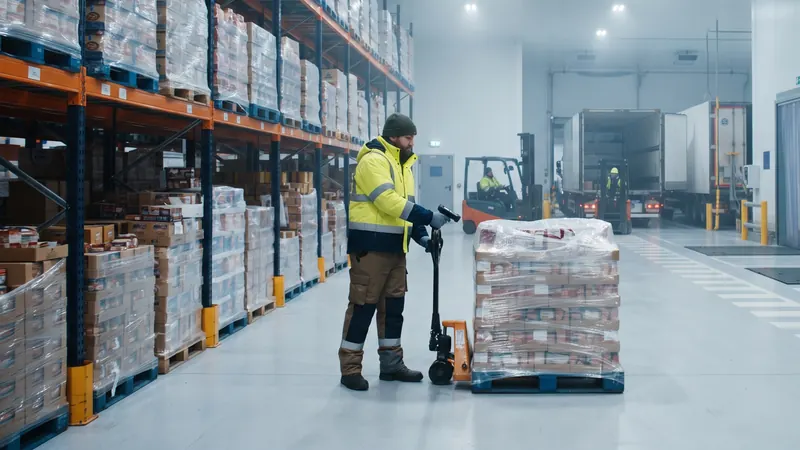
What FSSC 22000 V7 expects your organisation to control
Version 7 strengthens the expectation that food safety controls are integrated, verified and actively maintained. These are the areas auditors and certification bodies focus on.
- LeadershipCommitment and food safety policy alignment
- ContextRelevant internal and external issues
- Operational planningHACCP, hazard analysis and control measures
- Prerequisite programmesAligned to the sector-specific standard
- SuppliersService and purchased material controls
- Food defence and food fraudAssessments and mitigation plans
- AllergensManagement, labelling and cross-contact prevention
- VerificationInternal audits, management review and continual improvement
How FSSC 22000 V7 audits grade and close findings
Version 7 has three grading levels, and the certification body works to fixed close-out times. Build your internal audit and corrective action procedures to match.
FSSC 22000 V7 readiness checklist
Tick each item you already have in place. Unticked items are action points for your FSMS team.
FSSC 22000 guides
FSSC 22000 V7 training frequently asked questions
What is FSSC 22000 Version 7?
FSSC 22000 Version 7 is the latest version of the FSSC 22000 certification scheme, published in May 2026. It combines ISO 22000:2018, a sector prerequisite programme standard from the ISO 22002 series, and the FSSC additional requirements into a GFSI-recognised food safety management system certification framework.
Which FSSC 22000 V7 course should I choose?
Take Implementation of FSSC 22000 Version 7 for Food Manufacturing if you are implementing the scheme on a food manufacturing site. Choose Introduction to FSSC 22000 V7 if you are new to FSSC and need a broad overview, and Transition to FSSC 22000 Version 7 if you already know Version 6. Catering, packaging, transport, feed and retail sites take the FSSC 22000 V7 course for their own sector, each one complete on its own with no prerequisite course to buy first.
Does the Introduction course cover ISO 22000?
Yes. The Introduction course covers ISO 22000:2018, ISO 22002-100:2025 prerequisite programmes and the FSSC 22000 Version 7 additional requirements.
Does the Transition course apply to all food chain categories?
Yes. Transition to FSSC 22000 Version 7 is written for all food chain categories and focuses on the changes from Version 6 to Version 7, including scheme structure and additional requirement changes.
When is the deadline to move from FSSC 22000 Version 6 to Version 7?
The Version 7.0 scheme text does not publish one. The Foundation issues upgrade instructions when upgrade audits are required, so your date comes from those instructions and your certification body’s audit programme. Ask your certification body in writing and keep the reply.
Can a certification body still raise an Opportunity for Improvement under Version 7?
No. Version 7 has three grading levels, minor, major and critical nonconformity, and the scheme does not allow Opportunities for Improvement. If your internal audit procedure has an observation or OFI category, align it with the scheme.
How long do I have to close a major nonconformity?
Twenty-eight calendar days from the last day of the audit. If the major cannot be closed in that window the certificate is suspended. A critical nonconformity suspends the certificate within three working days, for a maximum of six months.
Which food chain category does not need a prerequisite programme standard?
Subcategory FII, brokering, trading and e-commerce. It is audited against ISO 22000:2018 and the FSSC 22000 additional requirements only. Every other category adds ISO 22002-100:2025 and a sector part.
Do I receive a certificate after completing the course?
Yes. Learners who complete the required lessons and assessments and are found competent receive a downloadable certificate of completion. The pass mark is 70%.
Is this certification training or awareness training?
These are online training courses that help learners understand and implement FSSC 22000 Version 7 and earn a certificate of completion. They do not replace a formal certification audit by an accredited certification body.
Can ASC help with implementation or audit readiness?
Yes. ASC Food Safety Consultants can support organisations with FSMS implementation, gap audits, internal audit support and certification readiness through the main ASC website, ascfoodsafety.com.
Can I take the FSSC 22000 courses outside South Africa?
Yes. FSSC 22000 is an international scheme and the courses are online, self-paced and in English, so they suit sites in any country. Prices are in rand, with indicative conversions shown on this page.
Prepare your team for FSSC 22000 Version 7 with practical online training
Build confidence in the Version 7 requirements, strengthen your FSMS knowledge and create training evidence for your food safety team.
- Choose the right courseImplementation, Introduction, Transition or a sector pathway.
- Learn onlineText, audio and video lessons from your learner dashboard.
- Complete testsKnowledge tests throughout and a final assessment.
- Download your certificateEvidence for training records and audits.
ascfoodsafetytraining.com is ASC’s online training website for courses, assessments and certificates. For consulting, FSMS implementation, gap audits and document support, visit our main website ascfoodsafety.com.