
FSSC 22000 Version 7 for Retail and Wholesale
Course Prerequisite(s)
- Please note that this course has the following prerequisites which must be completed before it can be accessed
-
 The ISO 22000 Standard
-
 ISO22002-100:2025 The PRP Standard Requirements
About Course
You must finish Step 1 and Step 2 before this course will open. A food chain subcategory FI audit is conducted against four documents. Steps 1 and 2 teach two of them. This course teaches the other two, ISO 22002-7:2025 and the FSSC 22000 additional requirements.
Enrolment on this course opens on its own the moment Steps 1 and 2 show as complete in your dashboard.
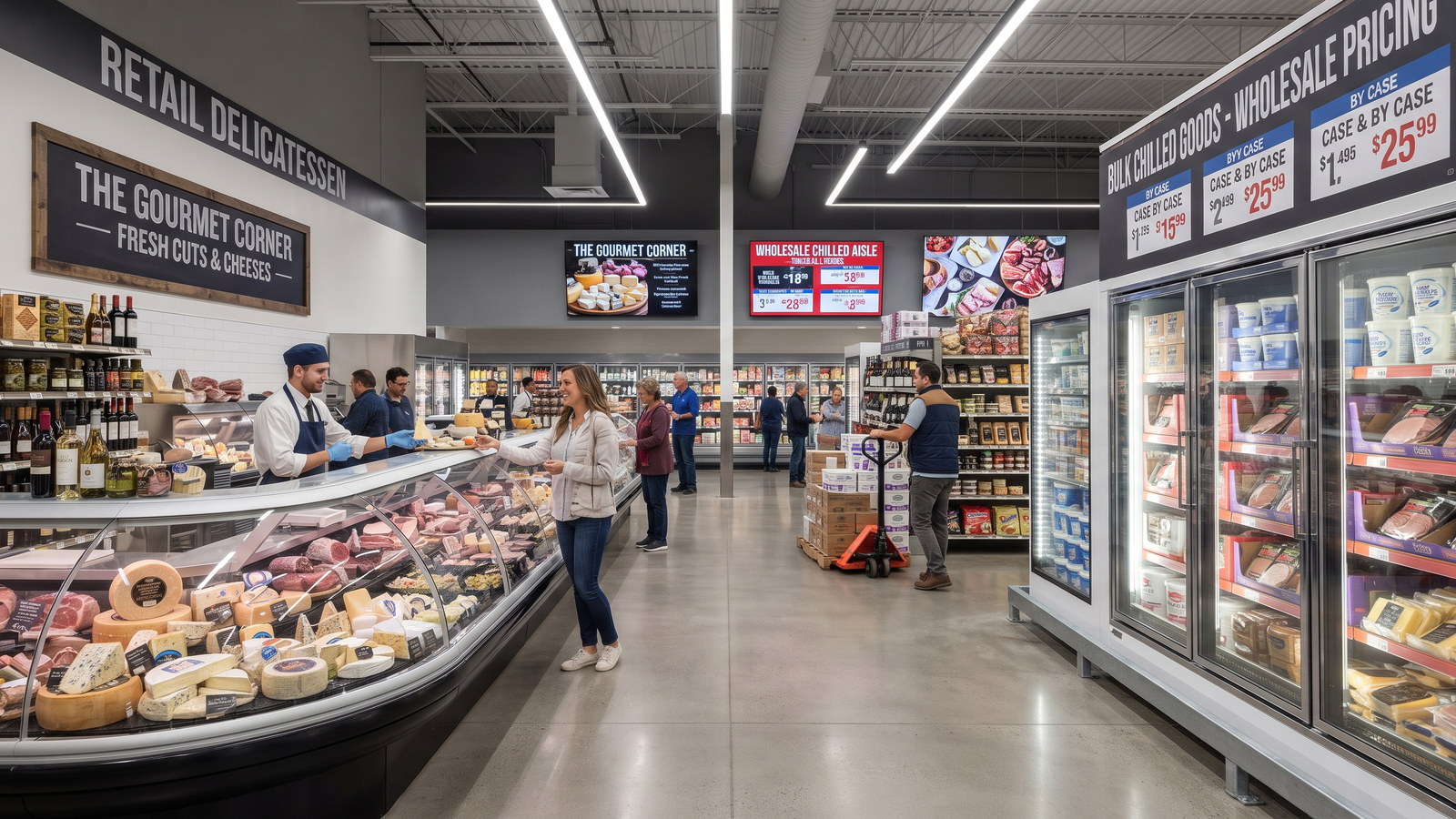
This course is the retail and wholesale layer of FSSC 22000 Version 7. It covers food chain category F and teaches what ISO 22002-7:2025 adds on top of ISO 22002-100:2025, together with the FSSC 22000 additional requirements at their real category F scope.
Category F divides in two, and the division matters more than in any other category. Subcategory FI covers retail and wholesale activities and related e-commerce: the storage and provision of finished products to customers and consumers, including minor processing such as slicing, portioning and reheating. Subcategory FII covers brokering, trading and e-commerce carried out without physical handling. The scheme treats them very differently, and one of the first things this course does is establish which one you are.
ISO 22002-7:2025 is the most detailed of the sector parts. Where the transport and storage part treats contamination in a single clause, the retail part breaks it into five, with a subclause devoted to allergen control. It carries a rework clause, and it alone in the family carries clause 18 on display — the requirements that apply where food is presented to the consumer on open counters, service cabinets and self-service fixtures. Nothing in the rest of the ISO 22002 family addresses that, and for a supermarket or a delicatessen it is the heart of the operation.
Twenty four lessons across four teaching modules, each closing with a knowledge check, then an implementation toolkit module with two browser based tools and a final assessment module. The graded final assessment runs to four parts, 150 questions and 180 marks, with Part 4 carrying double marks. Three attempts and a pass mark of 70 percent.
Course Content
Module 1: Category F, the FI and FII split, and what an audit is conducted against
-
Lesson 1: What this course covers, and what it assumes you already know
-
Lesson 2: FI and FII — the split that decides your whole audit
-
Lesson 3: The wholesale-at-main-site rule, and other scoping traps
-
Lesson 4: The four documents an FI audit is conducted against
-
Lesson 5: Where retail hazards actually come from
-
Module 1 knowledge check
Module 2: ISO 22002-7:2025, the store and its infrastructure
Module 3: ISO 22002-7:2025, contamination and the operational core
Module 4: Rework, display, and the additional requirements at category F scope
MODULE 5: THE IMPLEMENTATION TOOLKIT
MODULE 6: FINAL ASSESSMENT AND NEXT STEPS
Student Ratings & Reviews
