
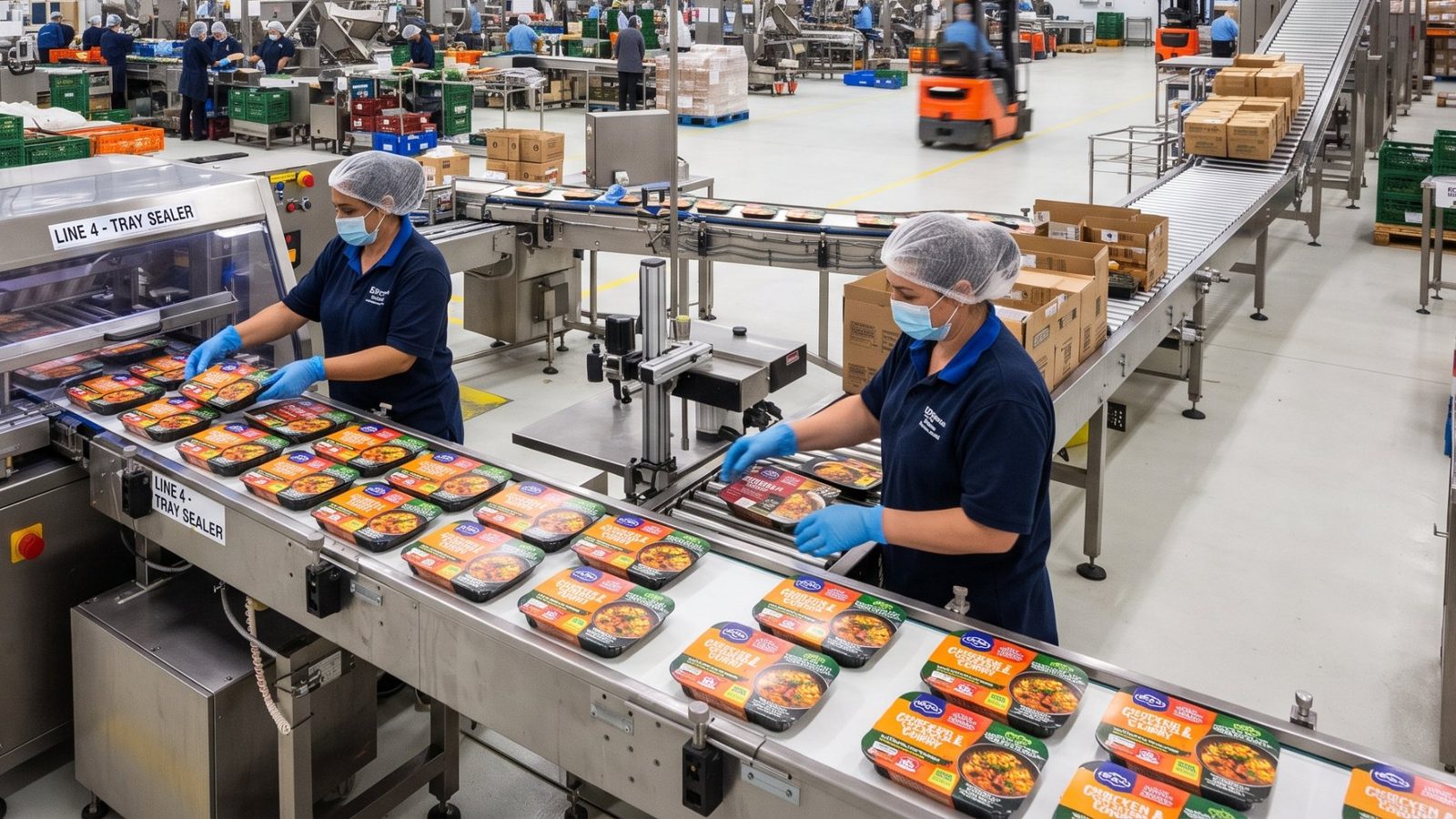

FS70 series · Food packaging · Online
Food packaging training in South Africa, from the converting line to the declaration of compliance
Self-paced online courses for the people who make, print and approve food packaging in South Africa: BRCGS Packaging Materials Issue 7, FSSC 22000 Version 7 for packaging, ISO 22002-4:2025 prerequisite programmes, and the food contact rules your customers now ask about.
4.9 from 2 300+ reviews across ASC courses · 6 800+ enrolments
- 4courses open now, plus a bundle
- 19new courses in development, see them ↓
- 6tracks, from the line to the lab
- 6 h+every new course
Food packaging training in short
- ASC runs 4 food packaging courses online now: Introduction to BRCGS for Packaging Materials Issue 7 (13 hours, R1 195), ISO 22002-100:2025 PRP Standard Requirements (8 hours, R1 500), Implementation of BRCGS for Packaging Materials Issue 7 (18 hours, R5 380) and FSSC 22000 Version 7 for Food and Feed Packaging Manufacturing (10 hours, R5 500).
- Every course is self-paced, assessed online and ends with a QR-verified certificate, for learners in South Africa and internationally.
- 19 more food packaging courses are in development, each 6 hours or more, from GMP for operators to food contact compliance and auditing.
- BRCGS Packaging Materials Issue 7 has been audited since April 2025. ISO 22002-4:2025, published in July 2025, replaced ISO/TS 22002-4:2013.
- South Africa has no general food contact materials regulation, so exporters also work to the importing market's rules, such as Regulation (EC) 1935/2004 in the EU.
BRCGS Packaging and FSSC 22000 packaging courses you can start today
Start with the scheme your customers ask for. Each course is self-paced, assessed online and ends with a QR-verified certificate.
Introduction to BRCGS for Packaging Materials Issue 7
For staff at packaging sites working towards BRCGS certification.
- What BRCGS Packaging Materials Issue 7 asks of a packaging site
- Hazard and risk management, site standards and product control
- How the certification audit works
- Certificate of completion
ISO 22002-100:2025 PRP Standard Requirements
For anyone implementing PRPs across food, feed and packaging.
- ISO 22002-100:2025, the PRP requirements common to the whole chain
- PRPs in six industries, food packaging manufacturing included
- Monitoring, verification and corrective action for PRPs
- Certificate of completion
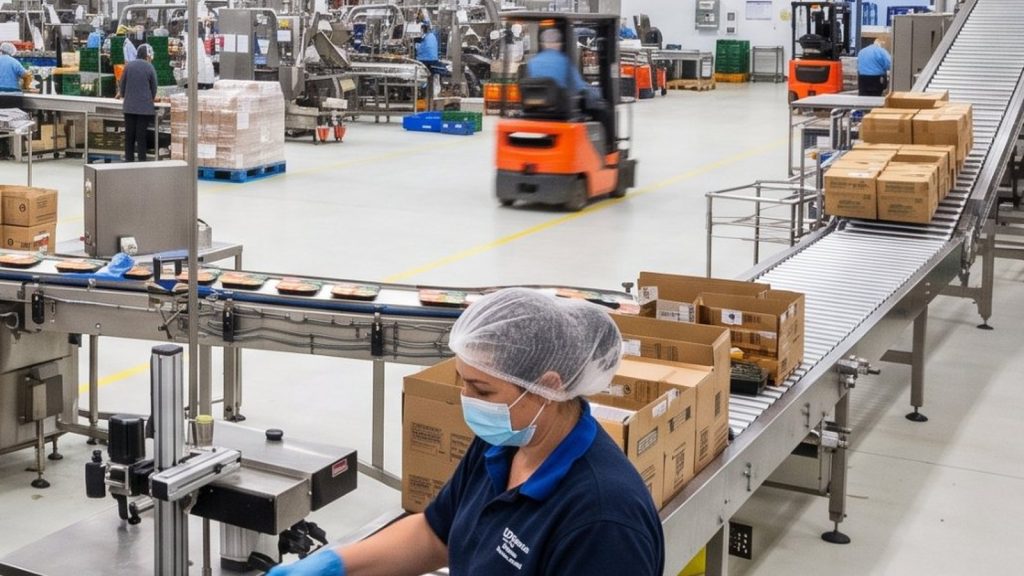
Implementation of BRCGS for Packaging Materials Issue 7
For technical managers implementing Issue 7 on site.
- Implementing BRCGS Packaging Materials Issue 7 clause by clause
- The documents and records an auditor expects
- Preparing the site for the certification audit
- Certificate of completion
FSSC 22000 Version 7 for Food and Feed Packaging Manufacturing
For packaging sites certified or certifying to FSSC 22000, category I.
- FSSC 22000 Version 7 requirements for packaging manufacturers
- ISO 22002-100:2025 and ISO 22002-4:2025 prerequisite programmes
- The FSSC additional requirements and the audit
- Certificate of completion
19 more food packaging courses, from the line to the laboratory
Every new course runs 6 hours or more, with case study activities on a packaging site, a graded final assessment and a QR-verified certificate. Open any course to see its modules.
On the line
Operators, supervisors and maintenance teams on a converting or packing floor.
GMP and Food Safety Training for Food Packaging Operators
FS70-0701 · Entry · 6 hours · in development
For: Machine operators, packers, warehouse and dispatch staff in plants that make or print food packaging.
Modules
- Why a pack is treated like food
- Personal hygiene, protective clothing and illness reporting
- Foreign bodies: glass, brittle plastic, blades, wood and metal
- Line clearance, changeovers and mixed print
- Cleaning, housekeeping and signs of pests
- Inks, lubricants and chemicals at the machine
- Allergens, product security and raising a concern confidentially
After this course you can
- Run a line clearance that a BRCGS or FSSC auditor would accept
- Explain to a new starter why a stray carton blank is a food safety incident
- Report broken glass or brittle plastic correctly the first time
Standards and law: ISO 22002-4:2025, ISO 22002-100:2025, BRCGS Packaging Materials Issue 7
Course tool: Line clearance check sheet builder
Food Safety for Engineering and Maintenance Teams: Food Packaging Manufacturing
FS70-0702 · Foundation · 6 hours · in development
For: Fitters, electricians, toolroom and engineering staff, and contractors working on packaging lines.
Modules
- How maintenance work contaminates a pack
- Tool control, blades, dies and swarf
- Temporary repairs and why they become permanent
- Food-grade lubricants and compressed air
- Hygiene clearance and handover after maintenance
- Hygienic design of converting and filling machines
After this course you can
- Hand a machine back to production with a signed hygiene clearance
- Control every tool and blade taken onto the floor
- Select an H1 registered lubricant where food contact is possible and record the registration
Standards and law: ISO 22002-4:2025, BRCGS Packaging Materials Issue 7, FSSC 22000 Version 7
Course tool: Maintenance hygiene clearance form generator
HACCP and hazard analysis
Building and running a hazard analysis for packaging, chemical migration included.
Introduction to HACCP for Food Packaging Manufacturing
FS70-0703 · Foundation · 8 hours · in development
For: Supervisors, QC staff and new HACCP or food safety team members at packaging sites.
Modules
- Prerequisites first: what HACCP sits on
- Biological, chemical (including allergens and migrants) and physical hazards in packaging
- Intended use: who fills the pack and with what
- The seven principles applied to a printing and converting line
- Critical limits, monitoring, corrections and corrective actions at the machine
- Records an auditor will ask for
After this course you can
- Describe a packaging product and its intended use in a HACCP study
- List the realistic hazards on a converting line, migration included
- Follow and record a monitoring step correctly
Standards and law: Codex CXC 1-1969, General Principles of Food Hygiene (revised 2020 and 2022), Chapter Two: HACCP, ISO 22000:2018, BRCGS Packaging Materials Issue 7
Course tool: Packaging hazard prompt cards
Advanced HACCP for Food Packaging Manufacturing: Hazard and Risk Analysis
FS70-0704 · Advanced · 20 hours · in development
For: HACCP team leaders, technical and quality managers at packaging sites, and food manufacturers approving packaging.
Modules
- Building the HACCP team and scope for a packaging site
- Product description, intended use, flow diagrams and on-site confirmation
- Chemical migration and NIAS as hazards
- Microbiological risk for hygiene-sensitive packaging: aseptic, ready-to-eat and infant food uses (Listeria monocytogenes, Enterobacteriaceae, moulds)
- Physical hazards and foreign-body risk assessment
- Allergen risk assessment and management plan
- Categorising control measures in each scheme's own language: CCPs and OPRPs (ISO 22000, FSSC 22000) and the control measure terms of BRCGS, IFS and SQF
- Validating control measures
- Verification, review and change management
- Workshop: full study on the Mzansi Pack case (three sittings)
After this course you can
- Lead a packaging hazard and risk analysis that stands up at certification
- Categorise and defend each control measure in the language of the site's own scheme
- Assess migration and NIAS risk for a pack from intended use, the declaration of compliance and test evidence
- Validate a control measure with documented evidence
Standards and law: Codex CXC 1-1969, General Principles of Food Hygiene (revised 2020 and 2022), Chapter Two: HACCP, ISO 22000:2018, BRCGS Packaging Materials Issue 7, FSSC 22000 Version 7, IFS PACsecure Version 3
Course tool: Packaging hazard analysis builder (exports Excel)
PRPs and certification schemes
ISO 22002-4, BRCGS Packaging Materials, FSSC 22000, IFS PACsecure, SQF and ISO 15378.
ISO 22002-4:2025 Prerequisite Programmes for Food Packaging Manufacturing
FS70-0705 · Intermediate · 12 hours · in development
For: Food safety coordinators, production and engineering managers at packaging sites.
Modules
- What changed from ISO/TS 22002-4:2013 to the 2025 pair
- Site, layout and building standards
- Utilities, air, water and waste
- Equipment, maintenance and calibration
- Purchased materials and supplier management
- Contamination, glass and brittle plastic control
- Risk-based hygiene programme, hygiene zoning and environmental monitoring
- Allergen controls
- Cleaning, pest control and personnel hygiene
- Warehousing and transport
- Rework, traceability and withdrawal
- Verifying that PRPs work
After this course you can
- Gap assess a packaging site against ISO 22002-4:2025
- Write PRP procedures that match what happens on the floor
- Use monitoring and verification records to show that PRPs work
Standards and law: ISO 22002-4:2025, ISO 22002-100:2025, FSSC 22000 Version 7
Course tool: ISO 22002-4:2025 gap assessment
BRCGS Packaging Materials Issue 7 for Management
FS70-0706 · Intermediate · 6 hours · in development
For: Site directors, general managers and department heads at BRCGS certified packaging sites.
Modules
- Senior management commitment and what the auditor asks you
- Product safety and quality culture on a packaging site
- Confidential reporting and the fundamental requirements
- Resources, objectives and management review
- Audit grades, and blended or unannounced audit options
- Reading an audit report and owning the corrective actions
After this course you can
- Answer the senior management questions at a BRCGS audit
- Set product safety objectives that the floor can see
- Run a management review that ends in agreed actions, owners and dates
Standards and law: BRCGS Packaging Materials Issue 7
Course tool: Management review pack builder
IFS PACsecure Version 3 for Packaging Manufacturers: Understanding and Implementation
FS70-0707 · Advanced · 16 hours · in development
For: Packaging sites supplying European retailers and brand owners who ask for IFS.
Modules
- IFS PACsecure and GFSI: which versions are recognised and what that means for your customers
- Governance and commitment
- Product safety and quality management system
- Resource management and operational processes
- Measurement, analysis and improvement
- Product fraud and product defence requirements
- The KO requirements, Major nonconformities and the unannounced audit
- The audit, scoring and certification
- Workshop: build the evidence pack for Mzansi Pack
After this course you can
- Gap assess a site against IFS PACsecure Version 3
- Prepare the site for IFS scoring and the KO requirements
- Build the evidence pack an IFS auditor expects
Standards and law: IFS PACsecure Version 3
Course tool: IFS PACsecure gap assessment
SQF Edition 10 Manufacture of Food Sector Packaging Code: Understanding and Implementation
FS70-0708 · Intermediate · 12 hours · in development
For: Packaging sites supplying North American customers and SQF certified food plants.
Modules
- The SQF system and the packaging code
- The SQF Practitioner, HACCP training and food safety culture
- System elements: management, documents and specifications
- Food safety plans for packaging
- Good manufacturing practices for packaging
- What Edition 10 changes and when audits start
- Preparing for the SQF audit
After this course you can
- Explain the packaging code to management
- Build a food safety plan in the SQF format
- Plan the move to Edition 10 audits
Standards and law: SQF Food Safety Code: Manufacture of Food Sector Packaging, Editions 9 and 10
Course tool: SQF packaging readiness checklist
ISO 15378: GMP for Primary Packaging Materials for Medicinal Products
FS70-0709 · Advanced · 16 hours · in development
For: Packaging converters supplying pharmaceutical and medical manufacturers.
Modules
- ISO 9001 plus GMP: how ISO 15378 is built, and what ISO 9001:2026 means for ISO 15378 certificates
- Risk management for primary packaging
- Contamination, mix-up and cleanroom controls
- Validation and qualification of processes and equipment
- Documentation, batch records and traceability
- Change control and deviations
- The certification audit
After this course you can
- Explain what ISO 15378 adds to ISO 9001 for a converter
- Set up batch records and change control a pharmaceutical customer will accept
- Prepare a site for an ISO 15378 certification audit
Standards and law: ISO 15378:2017 and Amendment 1:2024 (built on ISO 9001:2015), read alongside ISO 9001:2026
Course tool: ISO 15378 gap assessment
Food contact compliance
The law, the testing and the paperwork that make a pack legal to sell into food.
Food Contact Materials Regulations and Compliance: South Africa, the EU and the USA
FS70-0710 · Intermediate · 12 hours · in development
For: Technical and regulatory staff at packaging converters, food manufacturers and exporters.
Modules
- The South African position: no general food contact regulation, but the Foodstuffs Act, R638 of 2018 and the 2011 prohibition of polycarbonate infant feeding bottles containing BPA all apply
- EU framework: Regulation (EC) 1935/2004 and GMP Regulation (EC) 2023/2006
- Plastics: Regulation (EU) 10/2011 as amended
- Recycled plastics: Regulation (EU) 2022/1616
- Bisphenols: Regulation (EU) 2024/3190 as corrected
- United States: 21 CFR Parts 174 to 179 and the Food Contact Substance Notification Program
- Building a compliance file per pack
After this course you can
- Name the rules that apply to a pack in each market
- Read a supplier's compliance file and see what is missing
- Explain correctly to a customer what South African law does and does not require
Standards and law: Foodstuffs, Cosmetics and Disinfectants Act 54 of 1972, R638 of 2018, Regulation (EC) 1935/2004, Regulation (EC) 2023/2006, Regulation (EU) 10/2011, Regulation (EU) 2022/1616, Regulation (EU) 2024/3190, 21 CFR Parts 174 to 179, 21 CFR 170.100 to 170.106
Course tool: Food contact compliance file checker
Migration Testing and Declarations of Compliance for Food Contact Materials, with NIAS
FS70-0711 · Advanced · 12 hours · in development
For: Packaging technologists, QA managers and food manufacturers approving packaging.
Modules
- Overall and specific migration explained (plastics, with notes on paper, board and coatings)
- Simulants, test conditions and worst-case selection
- Reading a laboratory migration report
- Declarations of compliance: what a valid one contains
- Supporting documents and dual-use additives
- NIAS: screening, identification and risk assessment
- Workshop: approve or reject three realistic packaging submissions
After this course you can
- Choose a defensible migration test plan for a pack
- Approve or reject a declaration of compliance with reasons
- Assess NIAS using screening, identification and a TTC or Cramer class exposure approach, and record the conclusion
Standards and law: Regulation (EU) 10/2011, Regulation (EU) 2025/351, Regulation (EC) 1935/2004, EN 1186 series, EN 13130 series, Union Guidance on Regulation (EU) 10/2011 (guidance, not law)
Course tool: Migration test plan builder and declaration of compliance review checklist
Food Packaging Inks, Coatings and Adhesives: Low Migration and Mineral Oils
FS70-0712 · Advanced · 12 hours · in development
For: Printers, converters, ink and adhesive users, and food QA teams approving printed packaging.
Modules
- How ink and adhesive components reach food: set-off, migration and gas phase
- Low migration as a system property: ink choice, substrate, curing and printer GMP
- UV and EB curing: photoinitiators, cure verification and residual solvents
- Functional barriers and when they work
- Mineral oil hydrocarbons (MOSH and MOAH) and recycled fibre
- Controls on press: drying, curing, stacking and storage
- Supplier documents for inks and adhesives
After this course you can
- Control and verify set-off risk on a reel or stack through cure, drying, tension and stacking checks and targeted testing
- Ask ink and adhesive suppliers for the right documents
- Assess mineral oil risk for a recycled board pack
Standards and law: Regulation (EC) 1935/2004, Regulation (EC) 2023/2006, Swiss Ordinance SR 817.023.21, Annex 10, German Printing Ink Ordinance, EuPIA printing ink guidelines (industry guidance, not law), Commission Recommendation (EU) 2017/84 on mineral oil hydrocarbons (recommendation, not law)
Course tool: Printed pack risk screen
Packaging EPR and Sustainable Food Packaging: South Africa and the EU PPWR
FS70-0713 · Intermediate · 8 hours · in development
For: Brand owners, packaging buyers, sustainability and technical managers, and exporters to the EU.
Modules
- Extended Producer Responsibility in South Africa: who must register and report
- The scheme for paper, packaging and some single-use products
- Plastic carrier bag rules and recycled content dates
- The EU Packaging and Packaging Waste Regulation for exporters
- PFAS limits in food contact packaging
- Recycled content without a food safety failure: authorised recycling processes, challenge testing and mineral oil in recycled fibre
- Lightweighting, shelf life and food loss trade-offs
After this course you can
- Work out a business's EPR obligations
- Tell an EU customer what the PPWR means for the pack you supply
- Check a food contact pack against the PPWR PFAS limits and know when total fluorine results need follow-up
- Assess a recycled content change for food safety before it goes live
Standards and law: Regulations regarding Extended Producer Responsibility, GN 1184 of 2020, as amended, EPR Scheme for Paper, Packaging and Some Single-Use Products, GN 1187 of 2020, as amended, Plastic Carrier Bags and Plastic Flat Bags Regulations, as amended by GN 317 of 2021, Regulation (EU) 2025/40 (PPWR), Regulation (EU) 2022/1616
Course tool: EPR and PPWR obligations finder
Packaging technology and quality
Materials, specifications, defects, print control and pack integrity.
Food Packaging Technology: Materials, Barrier Properties and Specifications
FS70-0714 · Foundation · 12 hours · in development
For: Food QA, QC, NPD and buying staff who approve, specify or buy packaging.
Modules
- What packaging must do: protect, preserve, inform, sell
- Paper and board, including corrugated
- Plastics and flexible laminates
- Metal cans, closures and foil
- Glass containers and closures
- Barrier properties, product and pack interaction (scalping, corrosion, can lacquers) and shelf life
- Packaging specifications that a supplier can be held to
After this course you can
- Shortlist materials on oxygen, water vapour and light barrier data, then confirm shelf life by storage trials on the product in its pack
- Write a packaging specification with measurable limits
- Talk to a converter in their own terms
Standards and law: ISO 22002-4:2025, BRCGS Packaging Materials Issue 7, BRCGS Food Safety Issue 9
Course tool: Packaging specification builder
Packaging Quality Control: Specifications, Defects and AQL Sampling
FS70-0715 · Intermediate · 10 hours · in development
For: QC inspectors and supervisors at converters and at food plants receiving packaging.
Modules
- Receiving packaging: certificates of conformance and analysis
- Defect classification: critical, major, minor
- Sampling plans and AQL with ISO 2859-1:2026, ISO 2859-2 for isolated lots, and why critical defects need zero acceptance
- Dimensional, print and functional checks
- Seal strength, closure torque and leak checks
- Rejecting, holding and releasing a lot
After this course you can
- Set up a sampling plan for an incoming lot
- Classify packaging defects consistently across shifts
- Write a rejection backed by the specification and the sampling record
Standards and law: ISO 2859-1:2026, ISO 2859-2, ASTM F88 (seal strength), ASTM F2096 and F2338 (leak testing), BRCGS Packaging Materials Issue 7
Course tool: AQL sampling plan calculator and defect library
Artwork, Print and Barcode Control for Packaging Converters
FS70-0716 · Intermediate · 6 hours · in development
For: Prepress, print, QA and customer service staff at converters, and artwork coordinators at brand owners.
Modules
- Artwork approval and version control
- Plates, cylinders and print tooling control
- Preventing mixed print and wrong pack incidents
- Barcode quality and verification
- Allergen and legal text: who is responsible for what
- Print defects and first-off approval
After this course you can
- Run an artwork change with no obsolete version left in the building
- Verify a barcode and a first-off sheet
- Explain where the converter's responsibility for label text stops
Standards and law: BRCGS Packaging Materials Issue 7, R.146 of 2010 (labelling), GS1 General Specifications, ISO/IEC 15416:2025
Course tool: Artwork change control log
Food Package Integrity: Seal Testing, Can Double Seams and MAP
FS70-0717 · Advanced · 12 hours · in development
For: Food production, QA and engineering staff in canning, bottling, MAP and pouch operations.
Modules
- Why integrity failures make people ill: Clostridium botulinum in low acid canned foods, post-process leakers and cooling water chlorination
- Heat seals: settings, testing and failure modes
- Closures and caps: torque, security and tamper evidence
- Can double seams: teardown, measurements and what they mean
- MAP and vacuum packs: gas mix, gas to product ratio, residual oxygen and the 10 day rule for non-proteolytic Clostridium botulinum
- Leak testing methods and choosing one
- Investigating an integrity failure
After this course you can
- Set and verify heat seal parameters
- Carry out a double seam teardown, judge cover hook, body hook, overlap, tightness and thickness against the can maker's specification, and hold all product back to the last acceptable check when a seam fails
- Verify gas mix and residual oxygen with a headspace analyser against set limits
- Choose and validate a leak test for the pack
Standards and law: Codex CXC 1-1969, General Principles of Food Hygiene (revised 2020 and 2022), Chapter Two: HACCP, Codex CXC 23-1979, Code of Hygienic Practice for Low and Acidified Low Acid Canned Foods, Codex CXC 40-1993 (aseptically processed low acid foods), 21 CFR 113.60, BRCGS Food Safety Issue 9
Course tool: Seal and closure check sheet builder
Auditing and product security
Internal audits, packaging supplier audits, food defence and food fraud.
Internal and Supplier Auditing for Food Packaging Manufacturing
FS70-0718 · Intermediate · 16 hours · in development
For: Internal auditors at packaging sites and food manufacturers who audit their packaging suppliers.
Modules
- Audit principles to ISO 19011:2026, including remote and blended audits
- Planning an audit programme for a packaging site
- Auditing PRPs and hygiene on a converting floor
- Auditing the hazard analysis and migration evidence
- Auditing culture, allergen management and the traceability test
- Auditing a packaging supplier remotely and on site
- Writing findings and closing corrective actions
- Workshop: audit Mzansi Pack (three sittings)
After this course you can
- Plan and run an internal audit of a packaging site
- Audit a packaging supplier and grade the risk
- Write findings that drive root cause analysis and lasting corrective action
Standards and law: ISO 19011:2026, BRCGS Packaging Materials Issue 7, FSSC 22000 Version 7, IFS PACsecure Version 3
Course tool: Packaging audit checklist builder
Food Defence and Food Fraud (TACCP and VACCP) for Packaging Manufacturers
FS70-0719 · Intermediate · 6 hours · in development
For: Security, technical and site managers at packaging sites.
Modules
- Why packaging is a target: tampering, counterfeit and diversion
- Site security and access control
- Threat assessment for a packaging site
- Fraud vulnerability in raw materials and printed packaging
- Controlling printed packaging, waste and returns
- Testing the plan
After this course you can
- Complete a threat assessment for a packaging site
- Complete a fraud vulnerability assessment for key materials
- Control printed waste so it cannot be misused
Standards and law: BRCGS Packaging Materials Issue 7, FSSC 22000 Version 7, IFS PACsecure Version 3
Course tool: Packaging threat and vulnerability assessment
Tell us which course and how many people. We let you know when it opens.
What is food packaging training?
Food packaging training teaches the people who make, print, buy and approve food packaging to keep it safe for the food it will hold. It covers hygiene and foreign body control on the line, the hazard analysis for packaging, the certification schemes customers ask for, and the food contact rules that decide whether a pack can be sold into a market.
Packaging touches every product on the shelf. A stray blade, a glass fragment, an ink that sets off onto the food side or a wrong print run becomes the food manufacturer’s recall. That is why BRCGS, FSSC 22000, IFS and SQF all cover packaging manufacture.
- Provider
- ASC Food Safety Training, FoodBev SETA accredited (587/00337/1900)
- Open now
- 4 courses and 1 bundle, R1 195 to R5 500, no VAT charged
- In development
- 19 courses in 6 tracks, each 6 hours or more
- Standards
- BRCGS Packaging Materials Issue 7, FSSC 22000 Version 7, ISO 22002-4:2025, ISO 22002-100:2025
- Law covered
- Act 54 of 1972, R638 of 2018, R146 of 2010, the EPR regulations, Regulation (EC) 1935/2004, Regulation (EU) 10/2011
- Certificate
- QR-verified certificate (non-credit-bearing short course)
- Reviewed by
- Mthokozisi Nkosi, founder of ASC, FSSC 22000 and BRCGS lead auditor
- Last reviewed
- 1
Learn
Short lessons on your phone or laptop, with the standard or regulation behind every rule.
- 2
Practise
Case studies on a packaging site, with a model answer behind every activity.
- 3
Prove it
A graded final assessment you must pass to earn the certificate.
- 4
Show it
A QR-verified certificate the day you pass, ready for your training records and your next audit.
Which food packaging course should I take?
Find your role, start with the first course, then move to the second. Courses marked in development open as they pass ASC’s expert panel review.
| If you are | Start here | Then |
|---|---|---|
| A machine operator, packer or dispatch worker at a packaging plant | GMP and Food Safety Training for Food Packaging Operators in development | Introduction to HACCP for Food Packaging Manufacturing in development |
| A fitter, electrician or contractor on packaging lines | Food Safety for Engineering and Maintenance Teams (open now) | Food Safety for Engineering and Maintenance Teams: Food Packaging Manufacturing in development |
| A technical or quality manager at a BRCGS packaging site | Introduction to BRCGS for Packaging Materials Issue 7 | Implementation of BRCGS for Packaging Materials Issue 7 |
| A technical or quality manager at an FSSC 22000 packaging site | ISO 22002-100:2025 PRP Standard Requirements | FSSC 22000 Version 7 for Food and Feed Packaging Manufacturing |
| A HACCP team leader at a packaging site | Introduction to HACCP for Food Packaging Manufacturing in development | Advanced HACCP for Food Packaging Manufacturing: Hazard and Risk Analysis in development |
| A food manufacturer's QA team approving packaging | Food Packaging Technology: Materials, Barrier Properties and Specifications in development | Migration Testing and Declarations of Compliance for Food Contact Materials, with NIAS in development |
| A converter supplying EU or US customers | Food Contact Materials Regulations and Compliance: South Africa, the EU and the USA in development | Migration Testing and Declarations of Compliance for Food Contact Materials, with NIAS in development |
| An internal auditor or supplier auditor | Internal and Supplier Auditing Practices | Internal and Supplier Auditing for Food Packaging Manufacturing in development |
Which packaging standard does my customer want?
Most food customers ask a packaging supplier for BRCGS Packaging Materials, FSSC 22000 category I, IFS PACsecure or the SQF packaging code. Here is the current edition of each and where ASC teaches it.
| Standard | Current edition | Usually asked for by | ASC course |
|---|---|---|---|
| BRCGS Packaging Materials | Issue 7, published October 2024, audited since April 2025 | Retailers and brand owners in South Africa and the UK | Introduction and Implementation courses, open now |
| FSSC 22000, category I | Version 7, published May 2026, required for audits from 1 May 2027 | Multinational food manufacturers | FSSC 22000 Version 7 for packaging, open now |
| ISO 22002-4 | 2025 edition, read with ISO 22002-100:2025, replaced ISO/TS 22002-4:2013 | FSSC 22000 category I sites, for Version 7 audits | ISO 22002-100 course open now, packaging PRP course in development |
| IFS PACsecure | Version 3, mandatory since October 2024 | European and North American customers | In development |
| SQF packaging code | Edition 10 released, SQFI expects audits from 2 January 2027, subject to GFSI benchmarking | North American customers | In development |
| ISO 15378 | 2017 edition with Amendment 1:2024 | Pharmaceutical customers (primary packaging for medicinal products) | In development |
What does South African law say about food packaging and food contact materials?
South Africa has no general food contact materials regulation, so a packaging site works to the Foodstuffs Act, R638, the labelling and metrology rules, the EPR regulations and, for exports, the importing market’s food contact law. The courses teach each one in full. This is the short version, with the source you can quote.
| Area | What the rule says | Source |
|---|---|---|
| Selling food | It is an offence to sell a foodstuff that is contaminated, impure or decayed, or harmful or injurious to human health. The section applies whatever the source of the contamination, so a foreign body or chemical from the pack is covered. | Act 54 of 1972, s2(1)(b)(i) |
| Food contact materials | South Africa has no general regulation on materials and articles in contact with food. Converters supplying exporters work to the importing market's rules, and certified sites to their scheme's requirements. | Department of Health regulations under Act 54, checked 15 October 2026 |
| Baby bottles | Polycarbonate infant feeding bottles containing bisphenol A may not be manufactured, imported, exported or sold. | Regulations under Act 54 of 1972 (2011) |
| Hygiene | Food premises, including those that pack food, must meet the general hygiene requirements, which cover facilities, containers, storage, transport and records. | R638 of 2018 |
| Labels | Sets what a prepackaged food label must carry. The converter prints the approved artwork, so artwork approval and version control are where print errors are stopped. | R146 of 2010 |
| Net content | Prepackaged goods must comply with SANS 289 for quantity marking and control. | Legal Metrology Regulations, GN R877 of 2018, reg 20 |
| Producer responsibility | Producers of paper, packaging and some single-use products must register with the Department and take part in an extended producer responsibility scheme, their own or one run by a producer responsibility organisation. | GN 1184 of 2020 and GN 1187 of 2020, as amended |
| Plastic bags | Minimum post-consumer recyclate in plastic carrier bags and plastic flat bags: 50% from 1 January 2023, 75% from 1 January 2025 and 100% from 1 January 2027. | Plastic Carrier Bags and Plastic Flat Bags Regulations (GN R.625 of 2003), as amended by GN 317 of 2021 |
| Exports to the EU | Framework Regulation (EC) 1935/2004 and GMP Regulation (EC) 2023/2006 for all food contact materials, Regulation (EU) 10/2011 for plastics with a declaration of compliance, and the Packaging and Packaging Waste Regulation, applied since 12 August 2026, including PFAS limits for food contact packaging. | Reg (EC) 1935/2004, Reg (EC) 2023/2006, Reg (EU) 10/2011, Reg (EU) 2025/40 |
| Exports to the USA | Each substance that may migrate into food needs a legal basis: a listing in 21 CFR Parts 174 to 179, GRAS status, a prior sanction, a Threshold of Regulation exemption or an effective Food Contact Notification. | 21 CFR Parts 170 to 189 |
Checked against the gazetted text and official sources on 15 October 2026. This summary is training material, not legal advice.
How are you assessed, and what certificate do you get?
Every new FS70 course ends with a final assessment you must pass to receive the certificate. The QR code lets an employer or auditor check it online.
| New FS70 courses | Setting |
|---|---|
| Final assessment | 30 questions drawn from a bank of 60 or more |
| Conditions | Timed and proctored |
| Pass mark | 70 %, on every assessment |
| Attempts | 3, with feedback after each attempt |
Copy and paste blocked, and questions drawn from a larger bank so papers differ from one delegate to the next. The courses already open state their own assessment on the course page.
Scan to verify
Sample layout. The courses are non-credit-bearing short courses, so they earn no credits towards a registered qualification. The certificate is evidence of training your employer can use in its competence records.
How much does food packaging training cost?
The food packaging courses open now cost R1 195 to R5 500, and the BRCGS Packaging Materials Bundle is R5 260. Prices are in rand with no VAT charged. New courses are priced when they open.
Intermediate · 13 hours
Introduction to BRCGS for Packaging Materials Issue 7
R1 195
once-off · no VAT charged
- Self-paced, online
- Assessed online
- QR-verified certificate
Intermediate · 8 hours
ISO 22002-100:2025 PRP Standard Requirements
R1 500
once-off · no VAT charged
- Self-paced, online
- Assessed online
- QR-verified certificate
Advanced · 18 hours
Implementation of BRCGS for Packaging Materials Issue 7
R5 380
once-off · no VAT charged
- Self-paced, online
- Assessed online
- QR-verified certificate
Advanced · 10 hours
FSSC 22000 Version 7 for Food and Feed Packaging Manufacturing
R5 500
once-off · no VAT charged
- Self-paced, online
- Assessed online
- QR-verified certificate
Training a whole packaging site?
We enrol teams as a learner group with progress reporting, and companies can pay by invoice or purchase order.
Built for the people who make, print and approve food packaging
Operators and packers
Line clearance, glass and blade control and the hygiene habits auditors check on the floor. GMP and packaging hygiene training for operators is in development.
Engineering and maintenance
Tool control, food-grade lubricants and handing a machine back with a hygiene clearance.
Technical and QA managers
BRCGS Packaging Materials, FSSC 22000 category I and the PRPs behind them.
HACCP team leaders
A packaging hazard analysis that covers migration, foreign bodies and intended use.
Food manufacturers buying packaging
Specifications, declarations of compliance and packaging supplier approval.
Exporters and brand owners
EU and US food contact rules, the EU packaging regulation and South African EPR.
Printers and prepress
Low migration printing, set-off control, artwork and barcode verification.
Pharmaceutical packaging converters
ISO 15378 GMP for primary packaging materials.
Free guides on packaging standards from the people who built the courses
BRCGS P708: what changes in Packaging Materials Issue 7 on 10 August 2026
What position statement P708 changes for Issue 7 audits, and how to prepare.
Read the guide ImplementationHow to implement BRCGS Packaging Materials Issue 7: the 12-month plan
A month by month plan from gap analysis to the certification audit.
Read the guide Print controlBRCGS Packaging Materials artwork and print control
Artwork approval and version control that keep the wrong version off the press.
Read the guide ISO 22002-4:2025Set-off, migration and snap-off knives: what ISO 22002-4:2025 adds for converters
The requirements a converter meets for the first time under the 2025 standard.
Read the guide FSSC 22000FSSC 22000 for packaging: what a category I audit is conducted against
The standards and additional requirements behind a category I audit.
Read the guide CertificationBRCGS certification explained: what a food and packaging audit actually checks
What the auditor looks at on a food or packaging site, and how sites are graded.
Read the guideFood packaging terms you will meet in these courses
- Declaration of compliance
- A written statement that a food contact material or article meets the rules that apply to it.
- Migration
- The transfer of substances from packaging into food.
- Overall migration
- The total amount of non-volatile substances that transfer from packaging into food.
- Specific migration
- The amount of a named substance that transfers into food, measured against that substance's own limit.
- NIAS
- Non-intentionally added substances, such as impurities, reaction products and breakdown products.
- Set-off
- The transfer of substances from the outer or printed surface of a packaging material to the food contact surface when the material is stacked or reeled.
- Category I
- The FSSC 22000 food chain category for the production of food packaging and packaging material.
- Prerequisite programme (PRP)
- The basic conditions and activities needed to maintain food safety, such as cleaning, pest control, maintenance and personal hygiene.
What is food packaging training?
Food packaging training teaches the people who make, print, buy and approve food packaging to keep it safe for the food it will hold. It covers hygiene and foreign body control on the line, the hazard analysis for packaging, the certification schemes packaging customers ask for, and the food contact rules that decide whether a pack can be sold into a market.
Which standard does a packaging manufacturer need: BRCGS, FSSC 22000 or ISO 22000?
Your customers decide. Retailers and brand owners in South Africa and the UK often ask for BRCGS Packaging Materials Issue 7. Multinational food companies often ask for FSSC 22000, where packaging is category I. European and North American customers may ask for IFS PACsecure Version 3, and North American customers for the SQF packaging code. ISO 22000 on its own is certifiable, but most food customers ask for one of the schemes. Ask your three biggest customers before you choose.
How long does BRCGS Packaging Materials Issue 7 training take?
ASC's Introduction to BRCGS for Packaging Materials Issue 7 takes 13 hours and costs R1 195. Implementation of BRCGS for Packaging Materials Issue 7 takes 18 hours and costs R5 380. Bought together as the BRCGS Packaging Materials Bundle they cost R5 260, a saving of R1 315. Both are self-paced online courses with a QR-verified certificate.
Is there an online course for FSSC 22000 category I packaging manufacturers?
Yes. FSSC 22000 Version 7 for Food and Feed Packaging Manufacturing is a 10-hour self-paced online course at R5 500. It covers the FSSC 22000 Version 7 requirements for packaging manufacturers in category I, the ISO 22002-100:2025 and ISO 22002-4:2025 prerequisite programmes, the FSSC additional requirements and the audit.
Is there an ISO 22002-4:2025 training course?
Two courses open now cover it. ISO 22002-100:2025 PRP Standard Requirements (8 hours, R1 500) teaches the prerequisite programme requirements common to the food, feed and packaging chain, food packaging manufacturing included. FSSC 22000 Version 7 for Food and Feed Packaging Manufacturing (10 hours, R5 500) teaches ISO 22002-4:2025 as a category I site applies it. A dedicated ISO 22002-4:2025 course for packaging sites is in development.
Can I do these courses outside South Africa?
Yes. The courses are fully online, self-paced and taught in English, and ASC trains learners in South Africa and internationally. Prices are in South African rand. BRCGS Packaging Materials, FSSC 22000 and ISO 22002-4 are the same standards wherever the site is.
What changed in ISO 22002-4:2025?
ISO 22002-4:2025 was published in July 2025 and replaced ISO/TS 22002-4:2013. It is now a full International Standard and is used together with ISO 22002-100:2025, which holds the prerequisite programme requirements common to the whole food, feed and packaging chain. ISO 22002-4:2025 adds the requirements specific to food packaging manufacturing. FSSC 22000 Version 7 requires packaging manufacturers to meet both.
Does a packaging plant need HACCP?
Every packaging certification scheme asks for a documented hazard and risk analysis built on HACCP principles, and ASC's HACCP courses teach the method. For packaging that means physical hazards such as glass and metal, chemical hazards such as migration from inks, adhesives and plastics, and microbiological hazards where the pack will hold sensitive food such as ready-to-eat or infant products.
Is there a South African law on food contact materials?
South Africa has no general regulation on materials and articles in contact with food. The Foodstuffs, Cosmetics and Disinfectants Act 54 of 1972 still prohibits selling food that is contaminated or harmful, R638 of 2018 sets hygiene requirements for food premises and the transport of food, and a 2011 regulation prohibits polycarbonate infant feeding bottles containing bisphenol A. If you export, the importing market's rules apply too, for example Regulation (EC) 1935/2004 and Regulation (EU) 10/2011 in the European Union.
What is a declaration of compliance and who issues it?
A declaration of compliance is a written statement that a food contact material or article meets the rules that apply to it. In the European Union, Regulation (EU) 10/2011 requires one for plastic materials at every stage of the supply chain except retail, supported by documents that show how compliance was established, which must be made available to the authorities on request. In practice the converter issues it to the food manufacturer, and the converter's own raw material suppliers issue one to the converter.
What are migration testing and NIAS?
Migration is the transfer of substances from packaging into food. Overall migration measures the total amount of non-volatile substances that transfer, and specific migration measures named substances against their own limits. Tests use food simulants under time and temperature conditions that represent the worst foreseeable use. NIAS are non-intentionally added substances, such as impurities, reaction products and breakdown products. For plastics, Article 19 of Regulation (EU) 10/2011 requires them to be risk assessed even though they are not on the Union list.
Which course suits operators, and which suits technical managers?
Operators, packers and maintenance staff will start with the GMP and engineering courses on the line track, now in development. Supervisors and HACCP team members will take Introduction to HACCP for Food Packaging Manufacturing when it opens. Technical and quality managers can start now with BRCGS Packaging Materials or FSSC 22000 for packaging, then move to Advanced HACCP, food contact compliance and auditing as they open.
Is this an accredited qualification?
No. ASC Food Safety Training is a FoodBev SETA accredited training provider (587/00337/1900), but the food packaging courses are non-credit-bearing short courses. You receive a QR-verified certificate that your employer can use in its competence records and that an auditor can check online.
Can I enrol a team?
Yes. Buy several places in one order or ask for a team quote and pay by invoice. Managers can follow progress on the manager dashboard, and every delegate gets a QR-verified certificate the day they pass.
When do the new packaging courses open?
Each course opens once it is built and has passed ASC's expert panel review. Use the Notify me button, tell us which course and how many people, and we will let you know when it opens.
Train the people who make the pack
A packaging fault becomes someone else’s recall. Start with the course that matches your job and your customer’s standard.
Teams of five or more: contact ASC. Or browse all food packaging courses on the All Courses page.