


Food science · Food technology · Process engineering · Online
Food science and technology courses, from first principles to the factory floor
Eleven self-paced online courses that explain what food is made of, why it spoils, how it is processed and how a food plant really works. Written for an international audience on Codex, ISO 22000 and WHO and FAO guidance, by registered food scientists and technologists and ASC’s team of industry professionals.
- 11courses in four tracks
- 8 to 70 hof self-paced learning per course
- 40+question proctored final in every course
- 100%of lessons with a Listen option
Eleven courses. Pick your track and start at your level.
Food science explains the food. Food technology makes it. Process engineering sizes the plant. Each track runs from an introduction to industry-professional or advanced level, and the Complete Course covers the whole field in one programme.
Food Science
Chemistry, microbiology, nutrition, sensory science and food safety, from the basics to research depth.
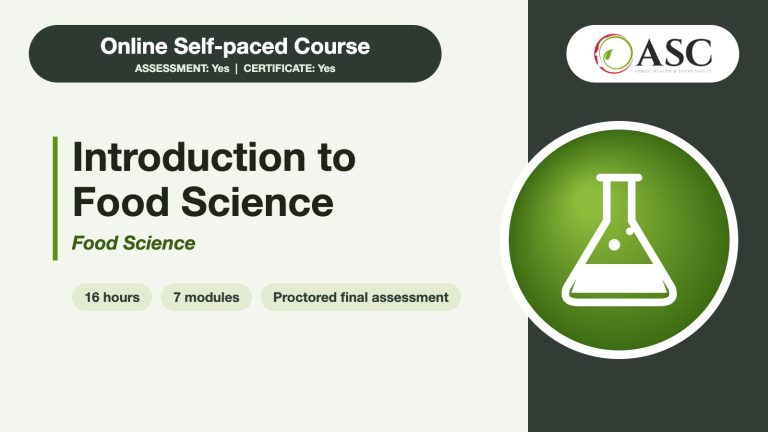
Food Science · Level 1
Introduction to Food Science
For school leavers, first-year students, career changers and anyone curious about the science in their food.
- Water, carbohydrates, proteins, fats and the reactions that change them
- What microbes need to grow, and spoilage versus food poisoning
- Energy calculations, simple sensory tests and why additives are used
- Preservation, the WHO Five Keys, HACCP and reading a label
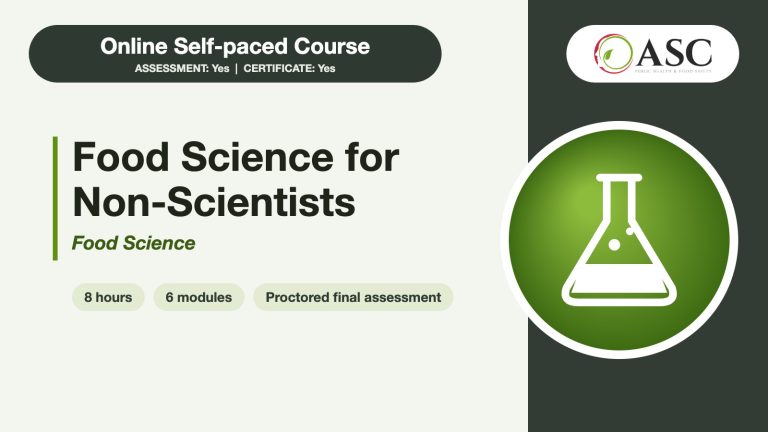
Food Science · Level 1
Food Science for Non-Scientists
For sales, marketing, procurement, finance, HR and anyone who works with food without a science background.
- What QA, QC and R&D teams do, and when to call them
- Read a specification sheet and lab results with confidence
- Shelf life, date marks, recalls and allergen declarations
- Nutrition panels and claims checked before they go to print
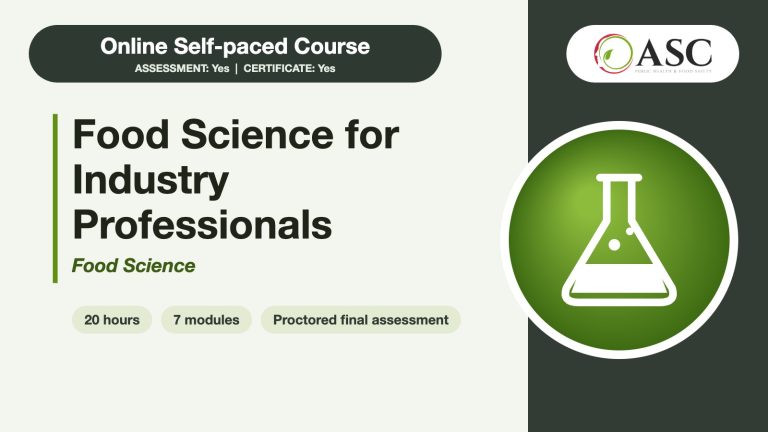
Food Science · Level 2
Food Science for Industry Professionals
For QA, QC and R&D professionals and technical managers with a science degree or equivalent experience.
- Water activity, glass transition and Arrhenius shelf-life prediction
- D, z and F values, predictive models and challenge tests
- Mycotoxins, contaminants, allergens and food fraud, risk-ranked
- Sensory statistics, measurement uncertainty and sampling plans
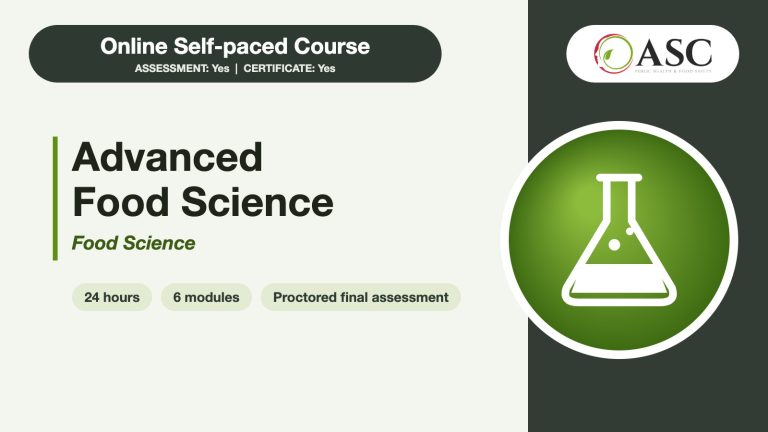
Food Science · Level 3
Advanced Food Science
For postgraduate students, senior scientists, specialists and researchers.
- Kinetic models, Maillard, lipid oxidation and glass-transition mechanisms
- Microbial stress, biofilms and whole-genome sequencing evidence
- Dose-response models, FSOs, POs and performance criteria
- Chemometrics, authenticity testing and the evidence on ultra-processed foods
Food Technology
Processing, preservation, packaging and plant performance, from first principles to process validation.

Food Technology · Level 1
Introduction to Food Technology
For school leavers, students, career changers and new factory staff who want to know how food is made.
- Food spoilage and how hurdle technology controls it
- Unit operations and process flow diagrams
- Pasteurisation, canning, UHT, chilling, freezing, drying and HPP
- Packaging, modified atmospheres and sustainability

Food Technology · Level 1
Food Technology for Non-Technical Professionals
For commercial, marketing, procurement, finance, logistics and HR staff, investors and entrepreneurs.
- How yield, OEE, downtime and changeovers drive cost
- What UHT, HPP, freeze-drying and extrusion do to shelf life and cost
- Stage-gate product development and working with co-manufacturers
- HACCP, audits, traceability and recalls from the business side
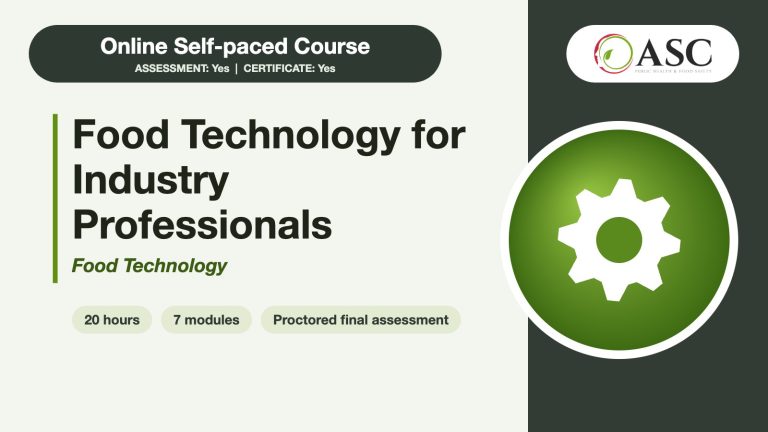
Food Technology · Level 2
Food Technology for Industry Professionals
For process technologists, production and engineering managers, and QA and NPD professionals.
- Mass, energy and psychrometric balances
- F₀ and P values, heat penetration data and process deviations
- HPP, PEF, UV-C and membrane processes, with validation plans
- Hygienic design, CIP, OEE, lean and TPM
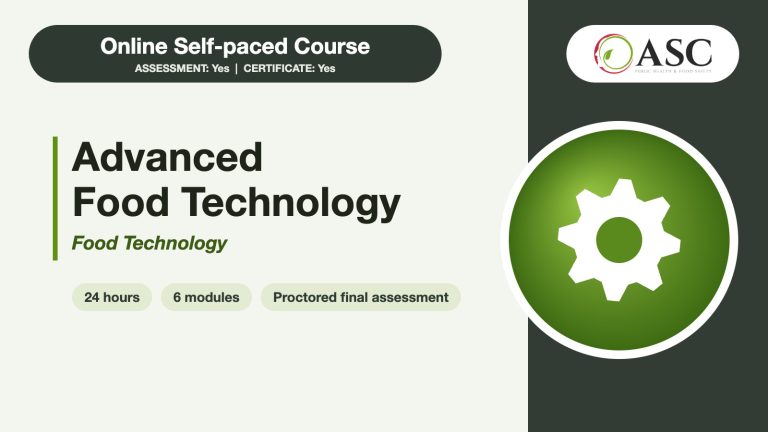
Food Technology · Level 3
Advanced Food Technology
For postgraduate students, senior process engineers, technical directors and researchers.
- Transient heat and mass transfer and dimensionless analysis
- Aseptic processing of particulates and novel-process validation
- Fermentation scale-up, precision fermentation and cultivated meat
- Extrusion, 3D printing, encapsulation, DoE and PAT
Food Process Engineering
The heat, flow and machines behind a food plant, with every calculation worked.
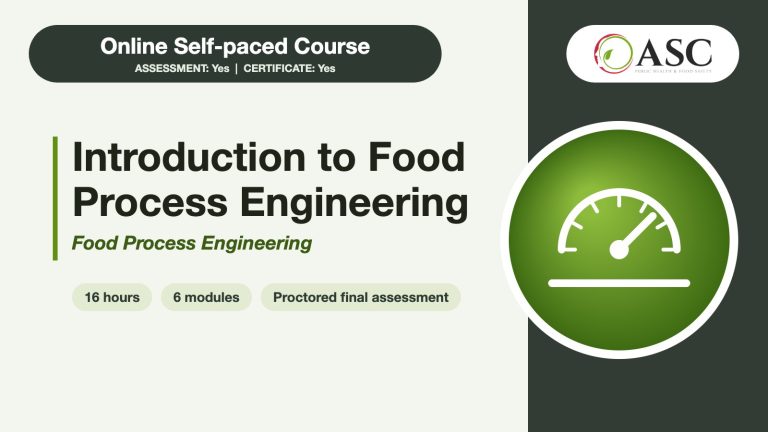
Process Engineering · Level 1
Introduction to Food Process Engineering
For students, technicians, operators, maintenance staff and new engineers in food manufacturing.
- SI units, steam tables and food property data
- Mass and energy balances for blending, evaporation and drying
- Heat exchangers, LMTD, the Reynolds number and pump selection
- Steam, water, compressed air and refrigeration utilities
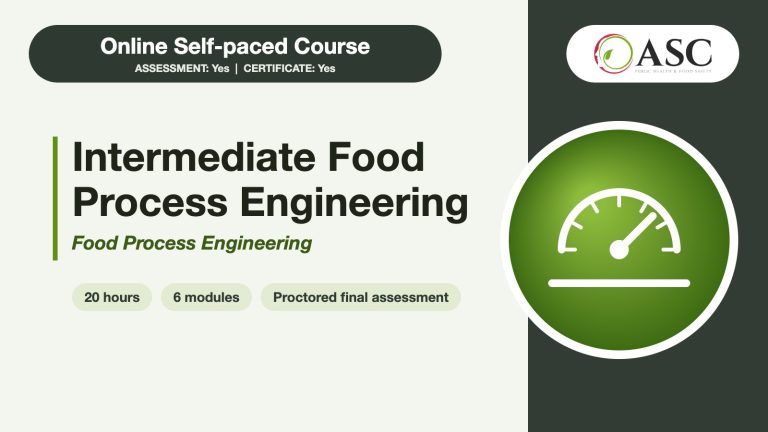
Process Engineering · Level 2
Intermediate Food Process Engineering
For process technologists, engineers and technical managers in dairy, brewing, beverages, meat, bakery and ingredients.
- Non-Newtonian flow, pressure drop, pump curves and NPSH
- Heat exchanger sizing, holding tubes and regeneration
- Evaporators, membranes, spray dryers and freezing times
- Centrifuge and mixer scale-up, instruments and control loops
The Complete Course
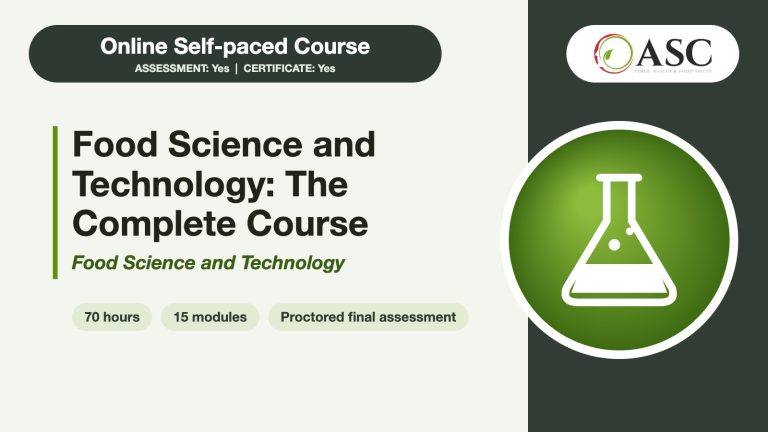
All of food science and technology in one 70-hour programme.
Food Science and Technology
Food Science and Technology: The Complete Course
For students, new graduates and professionals from other fields who want a complete, degree-level grounding.
- Food chemistry, microbiology, nutrition and sensory science
- Preservation, food engineering calculations and packaging
- GHP, HACCP, Codex, ISO 22000 and GFSI schemes
- Every major commodity, from cereals and dairy to meat and beverages
- A capstone that takes one product from concept to launch plan
What is food science and technology?
Food science and technology is the study of what food is made of, why it changes, and how it is made safe, stable and appealing at scale. It is the reason a yoghurt sets, a can of beans keeps for two years and a pasteuriser is set to a particular temperature and time.
Every decision in a food business rests on it: how long a sauce is heated, which packaging film is used, what date goes on the label, and whether a recipe change will still pass a shelf-life test. People who understand the science make fewer mistakes and explain their decisions clearly to auditors, customers and colleagues.
The courses are written by registered food scientists and technologists in ASC Food Safety’s multidisciplinary team of industry professionals, led by Mthokozisi Nkosi, with contributions from specialists in brewing, dairy processing, meat processing and nutrition.
- Provider
- ASC Food Safety Training, a FoodBev SETA accredited training provider (587/00337/1900)
- Tracks
- Food Science, Food Technology, Food Process Engineering and the Complete Course
- Levels
- Introduction, non-specialist, industry professional and advanced
- Time
- 8, 16, 20 or 24 hours per course, or 70 hours for the Complete Course; self-paced online
- Price
- R3 600 to R7 750 per course; Complete Course R15 999. No VAT charged
- Learning
- Narrated lessons, case studies, practical activities, knowledge checks and games in every module, all compulsory
- Assessment
- Video-proctored final; 70 % to pass; 3 attempts
- Certificate
- ASC Certificate of Achievement with QR verification
- Standards
- Codex Alimentarius, ISO 22000, GFSI schemes, WHO and FAO guidance
Which course should I take?
Start from the role you have today. Every course stands on its own, and each level builds on the one before.
| If you are | Start with | Then |
|---|---|---|
| New to food: school leaver, student or career changer | Introduction to Food Science or Introduction to Food Technology | The Industry Professionals course in the same track, or the Complete Course |
| Sales, marketing, procurement, finance, HR or customer care in a food business | Food Science for Non-Scientists or Food Technology for Non-Technical Professionals | The introduction course in the same track |
| QA, QC or R&D specialist, or technical manager | Food Science for Industry Professionals | Advanced Food Science |
| Process technologist, production manager or NPD professional | Food Technology for Industry Professionals | Advanced Food Technology |
| Technician, operator, maintenance staff or new engineer | Introduction to Food Process Engineering | Intermediate Food Process Engineering |
| Postgraduate student, senior scientist or technical director | Advanced Food Science or Advanced Food Technology | Both, to cover science and process depth |
| Anyone who wants the whole field in one programme | Food Science and Technology: The Complete Course | An Advanced course for specialist depth |
How are you assessed, and what certificate do you get?
Every course ends with a video-proctored final assessment that you must pass to receive the certificate. Proctoring is what makes the result something an employer can trust, and the QR code lets anyone check it.
| Final assessment | 8 to 24 hour courses | Complete Course |
|---|---|---|
| Questions | 40 | 60 |
| Time | 60 min | 90 min |
| Pass mark | 70 % | 70 % |
| Attempts | 3 | 3 |
| Before the final | Every module’s activity, knowledge check and game, plus a capstone project | |
Questions are drawn at random, so no two papers are the same. Allow camera and microphone access when the assessment asks for it.
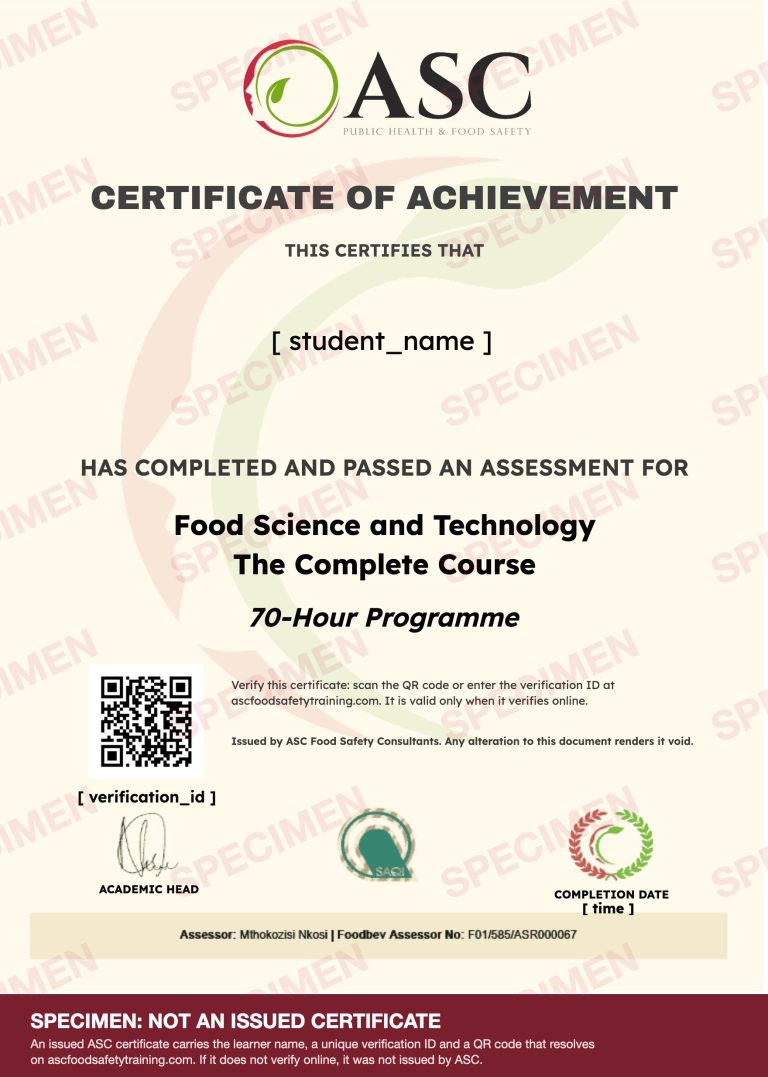
Specimen. What the certificate is: evidence of training your employer can use in its competence records. What it is not: these are non-credit-bearing short courses, so they earn no credits towards a degree, diploma or QCTO qualification.
How much do the food science and technology courses cost?
Prices are in rand with no VAT charged. Courses run from R3 600 for 8 hours to R7 750 for 24 hours, and the 70-hour Complete Course is R15 999.
| Course | Track | Level | Time | Price | Link |
|---|---|---|---|---|---|
| Introduction to Food Science | Food Science | Level 1 | 16 hours | R5 400 | Enrol |
| Food Science for Non-Scientists | Food Science | Level 1 | 8 hours | R3 600 | Enrol |
| Food Science for Industry Professionals | Food Science | Level 2 | 20 hours | R6 850 | Enrol |
| Advanced Food Science | Food Science | Level 3 | 24 hours | R7 750 | Enrol |
| Introduction to Food Technology | Food Technology | Level 1 | 16 hours | R5 400 | Enrol |
| Food Technology for Non-Technical Professionals | Food Technology | Level 1 | 8 hours | R3 600 | Enrol |
| Food Technology for Industry Professionals | Food Technology | Level 2 | 20 hours | R6 850 | Enrol |
| Advanced Food Technology | Food Technology | Level 3 | 24 hours | R7 750 | Enrol |
| Introduction to Food Process Engineering | Food Process Engineering | Level 1 | 16 hours | R5 400 | Enrol |
| Intermediate Food Process Engineering | Food Process Engineering | Level 2 | 20 hours | R6 850 | Enrol |
| Food Science and Technology: The Complete Course | The Complete Course | All levels | 70 hours | R15 999 | Enrol |
Teams of five or more: contact ASC for a group quote and a single invoice.
Built for the people who make, test and sell food
Students and new graduates
A structured grounding in food science and technology before your first role, or alongside your degree.
QA, QC and R&D teams
Shelf life, microbiology, sensory statistics and the calculations behind release decisions.
Production and process staff
How each unit operation works, what can go wrong, and how to validate the process.
Engineers and maintenance
Heat transfer, flow, pumps, evaporators, dryers and utilities, with every number checked.
Commercial and support teams
Enough science and technology to brief a supplier, question a claim or cost a new product.
Senior specialists and researchers
Graduate-level depth in kinetics, risk modelling, novel processes and scale-up.
Brewers, dairy and meat processors
Examples from brewing, dairy, meat, bakery, beverages and ingredients throughout.
Learners outside South Africa
Built on Codex, ISO 22000, GFSI and WHO and FAO guidance, so it applies wherever you work.
Free food science and technology guides from the people who wrote the courses
Twenty-two practical articles with worked examples, tables and FAQs. Each one goes deeper into a topic its course teaches.
Introduction to Food Science
Food Science for Non-Scientists
Food Science for Industry Professionals
Advanced Food Science
Introduction to Food Technology
Food Technology for Non-Technical Professionals
Food Technology for Industry Professionals
Advanced Food Technology
Introduction to Food Process Engineering
Intermediate Food Process Engineering
Food Science and Technology: The Complete Course
Frequently asked questions
Still unsure? Ask ASC, or use the WhatsApp button on this page.
What is the difference between food science and food technology?
Food science explains what food is made of and why it behaves the way it does: its chemistry, microbiology, nutrition and sensory properties. Food technology applies that science to make, preserve and package food safely at scale. Food process engineering adds the numbers behind the plant, such as heat loads, flow, energy and equipment sizing. The courses are split into those three tracks, and the Complete Course covers all of them.
Which course should I start with?
If you are new to the subject, start with Introduction to Food Science or Introduction to Food Technology. If you work in a food business but not in a technical role, take Food Science for Non-Scientists or Food Technology for Non-Technical Professionals. If you already have a science or engineering degree, or several years in QA, R&D or production, go straight to the Industry Professionals or Advanced level. The table under Which course should I take? sets this out by role.
Do I need a science background?
Not for the introduction courses or the two courses for non-scientists. The Industry Professionals courses expect a science degree or equivalent experience, and the Advanced courses expect a first degree in food science, engineering or a related science. Each course page lists exactly what you need before you start.
Are the courses based on South African law?
No. They are written for an international audience and follow Codex Alimentarius, ISO 22000, GFSI-benchmarked schemes and WHO and FAO guidance. The science and the engineering are the same in every country. Where your country has its own legal limits or labelling rules, apply your national legislation alongside what you learn.
How does the final assessment work?
Every course ends with a video-proctored final assessment. The 8 to 24 hour courses set 40 questions drawn at random, with 60 minutes to answer. The Complete Course sets 60 questions, with 90 minutes. The pass mark is 70 percent and you have 3 attempts. Allow camera and microphone access when the assessment asks for it.
Are the activities and games optional?
No. Each module has a case study or practical activity, a knowledge check and a game, and all of them are compulsory. Lessons open in order, and you need 70 percent on each knowledge check and game to open the next module.
Can I listen to the lessons instead of reading them?
Yes. Every lesson has a Listen to this lesson button, with a choice of voice and speed. It works on a phone, tablet or computer, so you can listen on the way to work and come back to the tables and worked examples later.
What certificate do I get?
Pass the final assessment and you receive an ASC Food Safety Certificate of Achievement for that course. It shows your name, the course, the completion date and a unique verification ID with a QR code, so an employer or auditor can check it online. You can download it from your dashboard as soon as you pass.
Is this an accredited qualification?
No. ASC Food Safety Training is a FoodBev SETA accredited training provider, but these eleven courses are non-credit-bearing short courses. The certificate is evidence of training for your CV and your employer’s competence records. It is not a degree, a diploma or a QCTO qualification, and it carries no credits towards one.
Who writes the courses?
Registered food scientists and technologists in ASC Food Safety’s multidisciplinary team of industry professionals, led by Mthokozisi Nkosi, with contributions from specialists in brewing, dairy processing, meat processing and nutrition. Every lesson is checked against current international references before it is published.
Can I enrol a team?
Yes. For five or more learners, contact ASC for a group quote and a single invoice.
Know the science behind every food decision
Pick the course that matches your role today. Each one ends with a proctored assessment and an ASC certificate anyone can verify online.
Teams of five or more: contact ASC. Or browse all ASC courses.