
Online Food Loss and Waste Training for Food Manufacturers
FSSC 22000 additional requirement 2.5.16 is the only GFSI benchmarked scheme requirement that asks a certified site to measure and actively reduce food loss and waste. ASC offers three online, self-paced courses that take a site the whole way: the vocabulary and habits for the people on the line, the measurement method behind a baseline an auditor cannot pick apart, and the policy, objectives and funded reduction programme that turn that number into money found. All three run on one worked production day at a vegetable freezing plant, so nothing is abstract.
The three food loss and waste courses
Three online, self-paced courses that work as a programme. Food Loss and Waste Essentials gives operators, packers and supervisors the vocabulary and the ability to sort what comes off their own station correctly. Measuring Food Loss and Waste gives QA and technical managers the scope, quantification method and mass balance discipline behind a defensible baseline. Reducing Food Loss and Waste for Sustainable Manufacturing turns that baseline into a costed, funded reduction programme, an objectives register that passes audit, and surplus routed to donation or animal feed safely.

What Is Food Loss and Waste?
Food loss and waste is any food, or any part of a food crop or animal that was fit for human consumption, that leaves the human food chain at any point from harvest or slaughter through to the point a household would have eaten it. A butternut trimmed past specification on a sorting table is food loss. A pallet held too long in a cold room and downgraded is food loss. A ready meal thrown out by a consumer after its date is food waste. What does not count is the material that was never edible in the first place: stem ends, peel destined for extraction, bone and feather are inedible parts, not food loss, even though they leave the plant in the same skip.
The instinct is to picture a household bin, but close to half of South Africa’s estimated 10.2 million tonnes a year never reaches a home. It is lost on farms, in packhouses, on cold chains and on production lines. For a manufacturer that is not a sustainability footnote. It is raw material bought, handled, chilled, cut and paid for, and then never sold. The worked production day these courses are built on shows 2 880 kg of good food leaving the chain in one shift, where the skip invoice accounted for about five percent of what it actually cost the site.
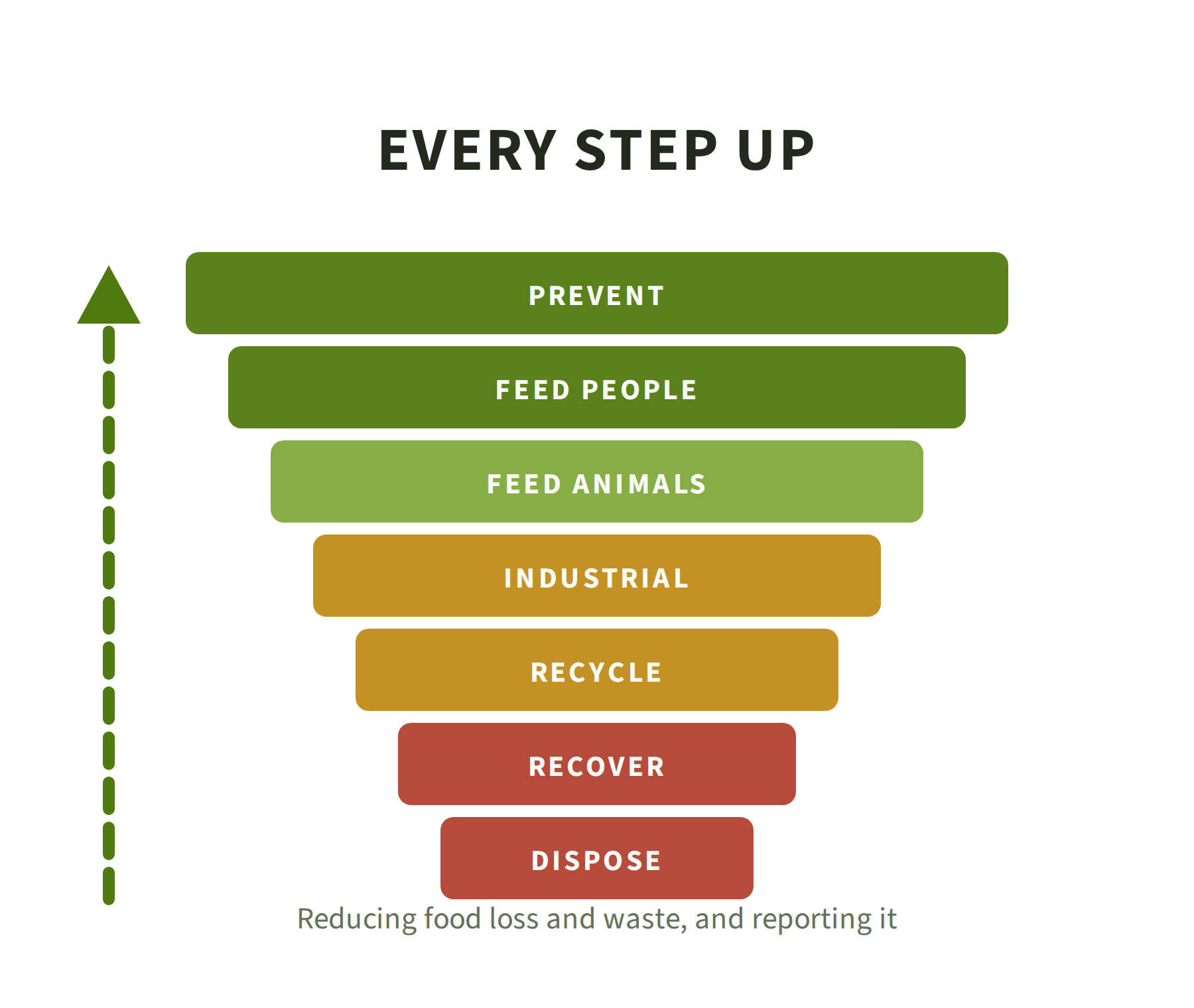
Not every tonne is equally bad, and the food recovery hierarchy ranks the options. Prevention sits at the top, then feeding people through donation, then feeding animals, then industrial uses, recycling, recovery, and finally disposal to landfill, sewer or refuse. A site that measures food loss and waste is expected to place every stream it generates on that hierarchy and to show material moving up the ladder over time, not just a total that drifts.
Start with the guide. The companion article what is food loss and waste, and why does FSSC 22000 clause 2.5.16 ask you to measure it sets out the definitions, the hierarchy and the clause in full, and the food loss and waste guides cover measurement, policy and donation in detail.
Three courses, in the order the work actually happens
You cannot reduce what you have not measured, and you cannot measure what the people generating the loss cannot classify. The programme follows that order, and each course stands alone if you only need one part of it.
Food Loss and Waste Essentials
R599, normally R899. About five hours. For machine operators, peelers, trimmers, packers, line supervisors, warehouse, dispatch and hygiene staff.
- 19 short lessons, all of them on a phone
- 36 diagrams and five short animations
- 11 timed quizzes and games from a bank of 227 questions
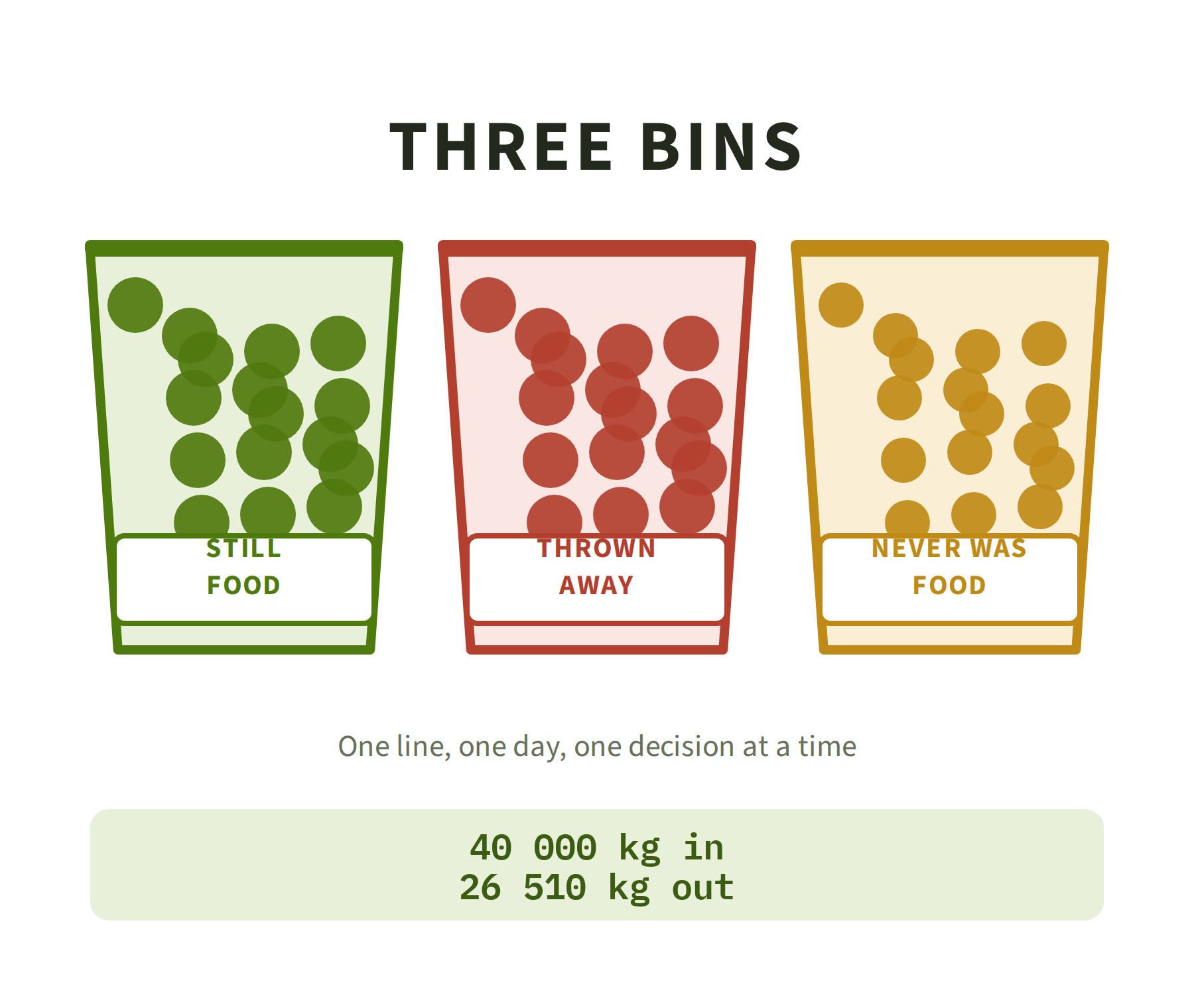
- Sort anything off the line into one of three piles: still food, thrown away, or never was food
- Say what a kilogram lost at the end of the line really cost
- The training evidence a site files against clause 2.5.16
Measuring Food Loss and Waste
R995, normally R1 695. About seven hours. For QA and technical managers, FSMS implementers and production managers who own the number.
- 21 lessons, 44 diagrams and 48 worked calculations
- 7 interactive tools, including a mass balance and a unit converter
- Set the four scope dimensions and defend each choice to an auditor
- Choose a quantification method that fits the data you actually have
- Stage loss, stage yield and cumulative yield, line by line
- A hands on workshop that builds a real, defensible baseline
Reducing Food Loss and Waste
R1 195, normally R1 995. About eight hours. For programme owners and sustainability officers who have a number and now have to move it.
- 25 lessons, 51 diagrams and 52 worked calculations
- 6 interactive tools, including a hotspot ranker and an objectives builder
- Rank hotspots, find the driver, and cost a lost kilogram properly
- The one page business case that gets an intervention funded
- A policy and objectives register with a defensible base year
- Donation and animal feed controls that survive a mock recall
All three, R2 789 per learner. Enrol five or more learners and contact ASC for a team rate and one invoice.
Who Is This Training For?
Food loss and waste is generated by the people on the line and owned by the people who report the number. A programme built on only one of those two groups does not survive an audit or a financial year.
Operators, Packers & Line Staff
Generate most of the loss and see it first. Essentials teaches them to sort it, weigh it and speak up about it.
Line Supervisors & Team Leaders
Read the shift board, tell a good day from a bad one, and hold the recording discipline the number depends on.
QA & Technical Managers
Own the clause 2.5.16 objective and have to defend the figure when an auditor asks where it came from.
FSMS Implementers
Build the policy, the objectives register, the prevention plan and the evidence pack that 2.5.16 a to d require.
Production & Process Managers
Need a prioritised, costed intervention list rather than a general instruction to waste less.
Sustainability Officers
Need one dataset that answers FSSC, a retailer scorecard and a sustainability report without three separate exercises.
Consultants & Auditors
Want a working method, not just the clause text, when advising or assessing a site on 2.5.16.
Packhouses & Cold Stores
Fruit and vegetable operations where trimming, sorting and cold chain decisions drive most of the loss.
What You Will Learn
Across the three courses, taught on one worked production day from the weighbridge to the pallet.
What counts as food loss and waste, what does not, and how to classify a stream at the point it is generated rather than at the skip
The food recovery hierarchy, and where every stream your site generates actually lands on it
What FSSC 22000, BRCGS, SQF and IFS require by clause, and what they do not
How to set the four scope dimensions of a measurement exercise and defend each choice to an auditor
How to choose a quantification method that fits the data you have, and which methods can never tell you a cause
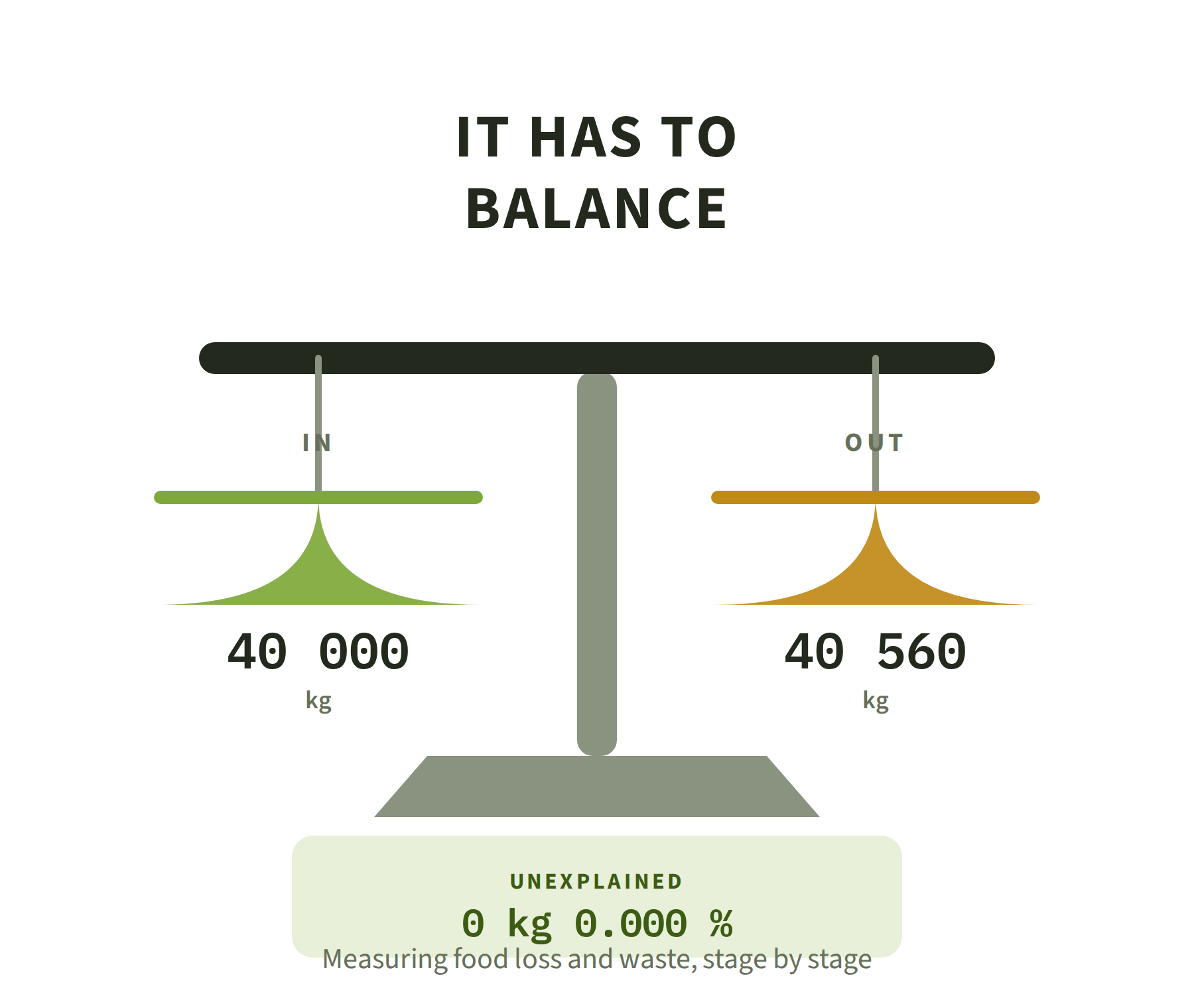
Stage loss, stage yield and cumulative yield at any point on any line, and how to close a mass balance within tolerance
How to take packaging weight out correctly and convert volume, count and effluent load to a weight in the state it was generated
How to rank hotspots, run a root cause analysis that lands on the driver, and cost a lost kilogram properly
How to write the one page business case that gets an intervention funded, with payback and confidence
How to write a policy and objectives register with a defensible base year and a metric that cannot be met by selling less
How to route surplus to donation and animal feed with the controls and traceability clause 2.5.16 b and c require
How to produce the numbers FSSC, a sustainability report and a retailer scorecard each ask for, from one dataset
How It Fits Your Food Safety Management System & the Standards
FSSC 22000 additional requirement 2.5.16 is written in four parts. Part a asks for a documented food loss and waste policy, a defensible base year and objectives with a prevention plan behind them, not a statement of intent. Personnel training and the controls that apply when surplus food is donated or routed to animal feed sit under parts b and c, so a site cannot claim credit for donating surplus without also proving the diversion was controlled and traceable. The requirement closes with monitoring and records, which is the part an auditor actually tests: ask where a number came from, and the file has to answer.
BRCGS Food Safety Issue 9 clause 4.12 and 4.13 and SQF clause 11.8 deal with waste handling as part of their prerequisite programme and environmental sections, and the practices taught here apply directly. Beyond certification, the same measured dataset is what feeds a sustainability report, a customer or retailer scorecard, and any environmental disclosure your buyers start asking for. Measure it once, properly, and you answer all of them from one baseline instead of rebuilding the number for each audience.
None of it works without the floor. A baseline built without the cooperation of the people generating the loss is a baseline nobody trusts and nobody can repeat next year. That is why the programme starts with the line staff course and why the certificate each learner receives is itself the training evidence a site files against clause 2.5.16.
Food loss and waste guides
Five practitioner guides that cover the same ground as the courses, written for the questions people actually ask before they enrol.
Frequently asked questions
Which certification scheme requires a site to measure food loss and waste?
Which of the three courses do we need?
Do we have to do the courses in order?
Do learners need to work at a factory to complete the activities?
How long does the programme take, and how is it delivered?
Is there a certificate, and does it count as audit evidence?
What does the programme cost, and are there team rates?
Who wrote the courses?
Browse all ASC food safety courses
Every accredited online course we offer, including food handler, R638, HACCP, GMP, FSSC 22000, ISO 22000, BRCGS, GLOBALG.A.P., microbiology, allergen, auditing and more.














Measure It, Then Reduce It
Your line loses money in a bin every shift, and clause 2.5.16 now asks you to put a number on it and bring that number down. Train the people standing next to the loss, build a baseline an auditor cannot pick apart, and turn it into a funded programme. Three online, self-paced courses, about twenty hours in total, each ending with a QR verified certificate.