
Food Loss and Waste in Foodservice and Hospitality
About Course
Cut food waste and costs, without cutting corners on safety.
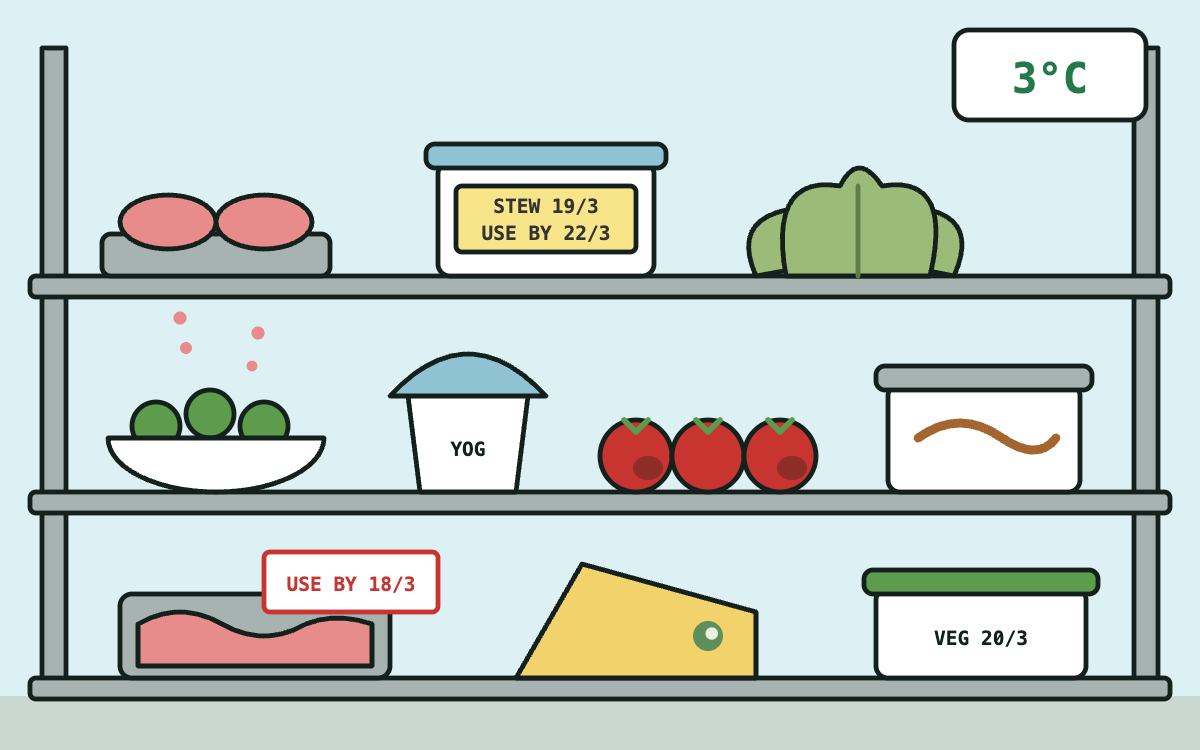
An interactive, self-paced online course for kitchens, guesthouses, lodges, hotels and caterers. Learners guess the shelf life of common foods, inspect a walk-in fridge and a dry store for safety and quality problems, decode date labels, scale a recipe, forecast breakfasts, work out what their bin costs, and learn which foods can safely be repurposed or donated.
Who it is for
Chefs, cooks, kitchen and stores staff, food and beverage managers, guesthouse owners and caterers.
What the course covers
- Module 1 · Why food waste matters: How much food is wasted, where kitchen waste comes from, what it costs your business, and the food waste hierarchy.
- Module 2 · Food safety or food quality?: The difference between food that is unsafe and food that is past its best, how to spot each, and what can be trimmed, used or repurposed.
- Module 3 · Date labels and shelf life: Best before, use by and sell by under R146, open life after opening, and how long common foods really keep in the fridge, freezer and cupboard.
- Module 4 · Storing food to last longer: Receiving checks, stock rotation, dry store and fridge inspections, storing fruit and vegetables, and techniques that extend shelf life safely.
- Module 5 · Recipes, portions and forecasting: Standard recipes, scaling with a conversion factor, yield percentages for buying, forecasting covers and controlling portions.
- Module 6 · Reuse, repurpose and redistribute: Which foods may be used again and which never, turning trimmings and surplus into new dishes, donating safely, and what to do with what is left.
How it works
6 interactive modules of 35 to 45 minutes each, about 4 hours in total. Each module is followed by a picture-based quiz (70% to pass). A 20-question final assessment (80% to pass) closes the course and unlocks a QR-verified ASC certificate of achievement.
The final assessment is proctored. You need a device with a working camera and microphone, and a quiet place to write it. Copying and pasting are blocked, and the recording is reviewed before your certificate is released.
This is a non-accredited short course with a QR-verified ASC certificate of achievement. It builds on basic food safety: food handlers should also complete Basic Food Safety Practices for Food Handlers for their R638 training records.
Course Content
Start here
-
Welcome and how this course works
Module 1: Why food waste matters
Module 2: Food safety or food quality?
Module 3: Date labels and shelf life
Module 4: Storing food to last longer
Module 5: Recipes, portions and forecasting
Module 6: Reuse, repurpose and redistribute
Final assessment and Feedback
Student Ratings & Reviews
