
Commissioning New Food Equipment: The FAT and SAT Gates That Keep Biofilm Out of a New Line
A new machine arrives with its problems already welded in. The four gates from purchase order to first production, and the evidence to demand at handover.
Most joints on a food line are welds, and a bad one is a permanent harbourage niche. How to specify, inspect and sign off welds you cannot see inside.
Belt edge, bed, return rollers, drive, transfer and frame. Score a conveyor at those six points, with a photograph on every zero, and you have a capital case rather than a complaint.
Drains are nobody’s equipment until something goes wrong. Here is the profile, the fall, the cover and the rated capacity to specify, how to audit a room in one shift, and the four findings almost every plant has.
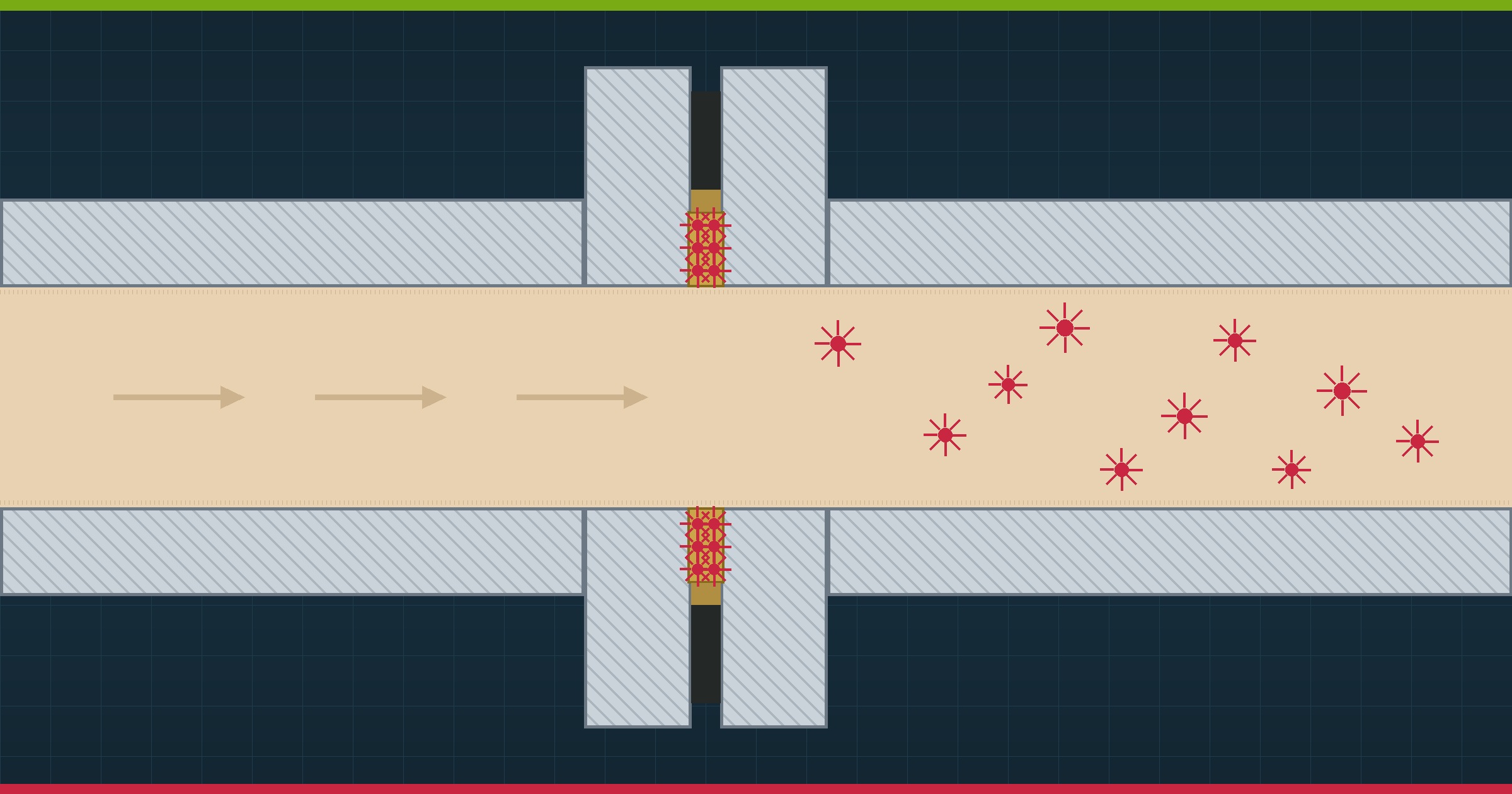
A dead leg is a branch the cleaning solution sweeps past instead of through. Here is how to find every one on your line with a tape measure, how to work out L over D, which guidance sets which limit, and what the fix actually costs.
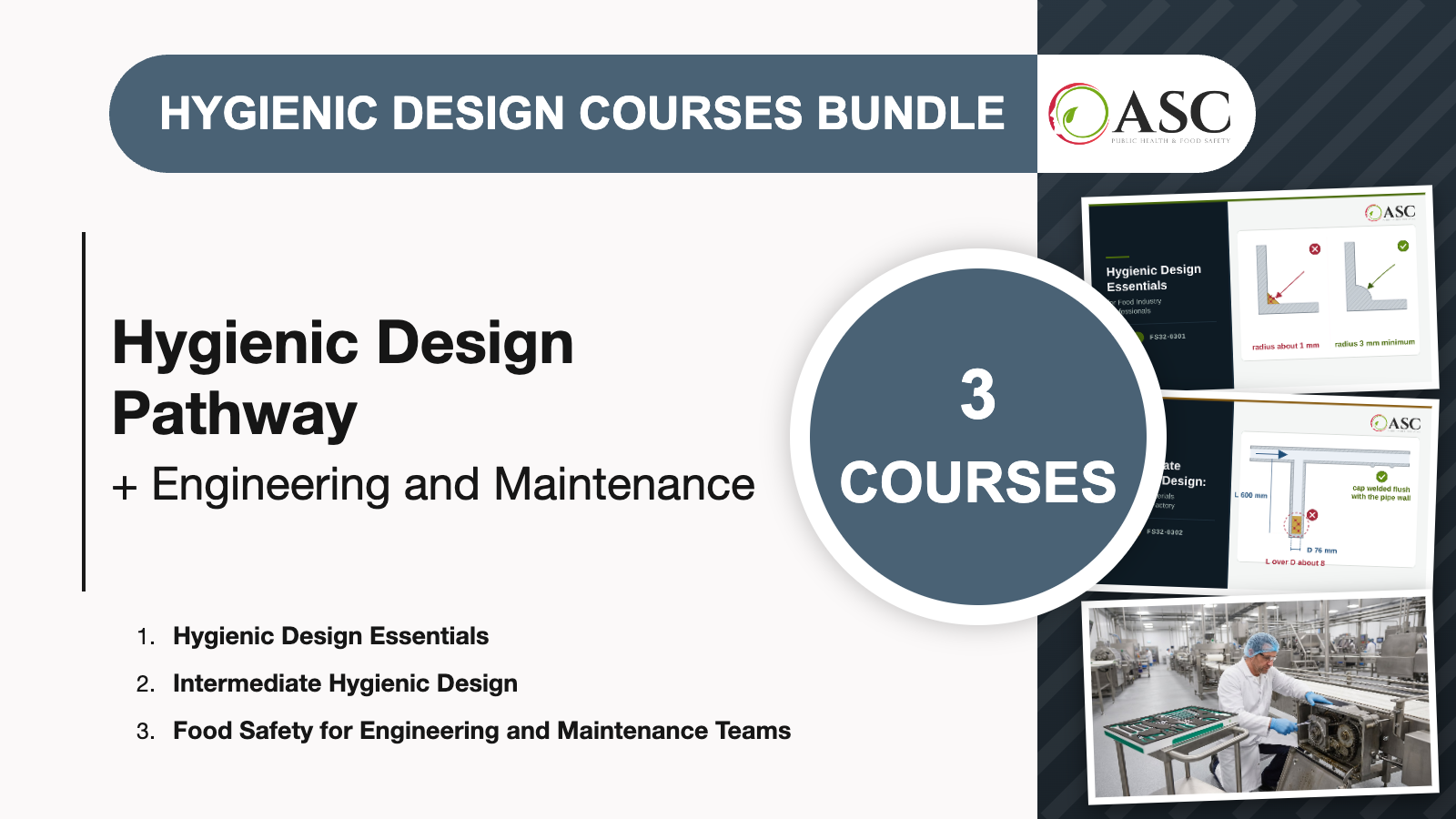
Hygienic design is why a machine that is cleaned perfectly can still fail a swab. The ten rules from EHEDG Guideline 8 with the actual numbers, what R638 regulation 6 already requires of your equipment, which scheme clause your auditor will open, and six design faults you can find on your own line this week.

Chat with us now, whichever is easiest for you.
Explore ASC services, training information, support pages and compliance resources.