
HYGIENIC DESIGN · COMMISSIONING · FAT AND SAT
Key facts
- Gate 1 the purchase specification, signed by QA and engineering before the order is placed
- Gate 2 the FAT at the supplier’s works: materials, finish, welds, drainability, access, documents
- Gate 3 the SAT on your floor: site welds, pipe runs, clearances, drainage, interfaces
- Gate 4 cleanability proven: coverage test, first validated clean, baseline swabs, then production
- The lever payment stages tied to gates, so evidence arrives without chasing
- Course the full gate system is built in Advanced Hygienic Design and Engineering, 24 hours, R6 500 until 30 November
Your next machine is on order right now
Somewhere in your business a purchase order for equipment is being raised this month. Advanced Hygienic Design and Engineering teaches the specification, the FAT and SAT checklists and the acceptance system, built in workshops on a realistic site, so the next machine arrives clean by design.
See the Advanced course, R6 500 →
R6 500 until 30 November, then R7 900. 24 hours, Level 5, lifetime access, certificate on completion.Why do four gates beat one commissioning blob?
On most plants, commissioning is a single happy blur: the machine lands, the fitters connect it, the supplier’s technician runs it, everyone takes a photograph and production wants it on Monday. Every hygienic design failure the machine carries sails through that week untouched, because nobody’s job was to look for it and there was no moment when looking had consequences.
Gates change that. A gate is a point where defined checks happen, evidence is produced and somebody signs before the project moves. Four of them cover the life of a purchase: specification, FAT, SAT, and the cleanability gate before first production. The same machine, the same week of delivery, but now a bad weld found at the supplier’s works is the supplier’s cost, an uncleanable detail found at SAT blocks handover rather than becoming a swab trend, and the file an auditor will one day ask for writes itself as you go. The schemes expect exactly this: FSSC 22000’s equipment management requirement and BRCGS Issue 9 both demand specification, supplier evidence and commissioning that proves the equipment can be cleaned. The detail of what those clauses ask for is in hygienic design at audit.
Gate 1: the specification, before the money moves
Everything downstream depends on the purchase specification, because every later gate is a check against it. No specification, nothing to accept against, and the FAT becomes a factory tour with coffee. The document states your materials, surface finish, weld requirements, drainability, access, the standards you cite, the evidence the supplier must produce and the fact that acceptance is against this document. Write it once as a template and every future purchase inherits it. The structure is in the purchase specification guide, and the weld lines specifically are in hygienic welding for food equipment.
Put the commercial lever in at the same time: payment stages tied to gates. A supplier who knows that ten percent waits for the documentation pack delivers the documentation pack.
Gate 2: the FAT, the cheapest findings you will ever get
At the supplier’s works the machine is accessible, apart, and surrounded by the people who built it. A fault found here is corrected in the workshop in days. The same fault found on your floor is a contractor visit, a production stop and a negotiation.
Work the checklist against the specification: materials verified against certificates, surface finish measured where it matters, welds checked against the weld map with the agreed borescope sample, drainability tested with water rather than assumed from drawings, access for cleaning demonstrated, and the uncleanable details hunted deliberately: exposed threads in product areas, hollow sections with openings, unsealed metal to metal overlaps in wet cleaned areas, ledges and dead corners. Photograph everything, score it with the free 30 point Hygienic Design Walk, and leave with a punch list the supplier signs. A zero in a food contact area means the machine does not ship until it is fixed.
Send your engineer to the FAT with a trained eye
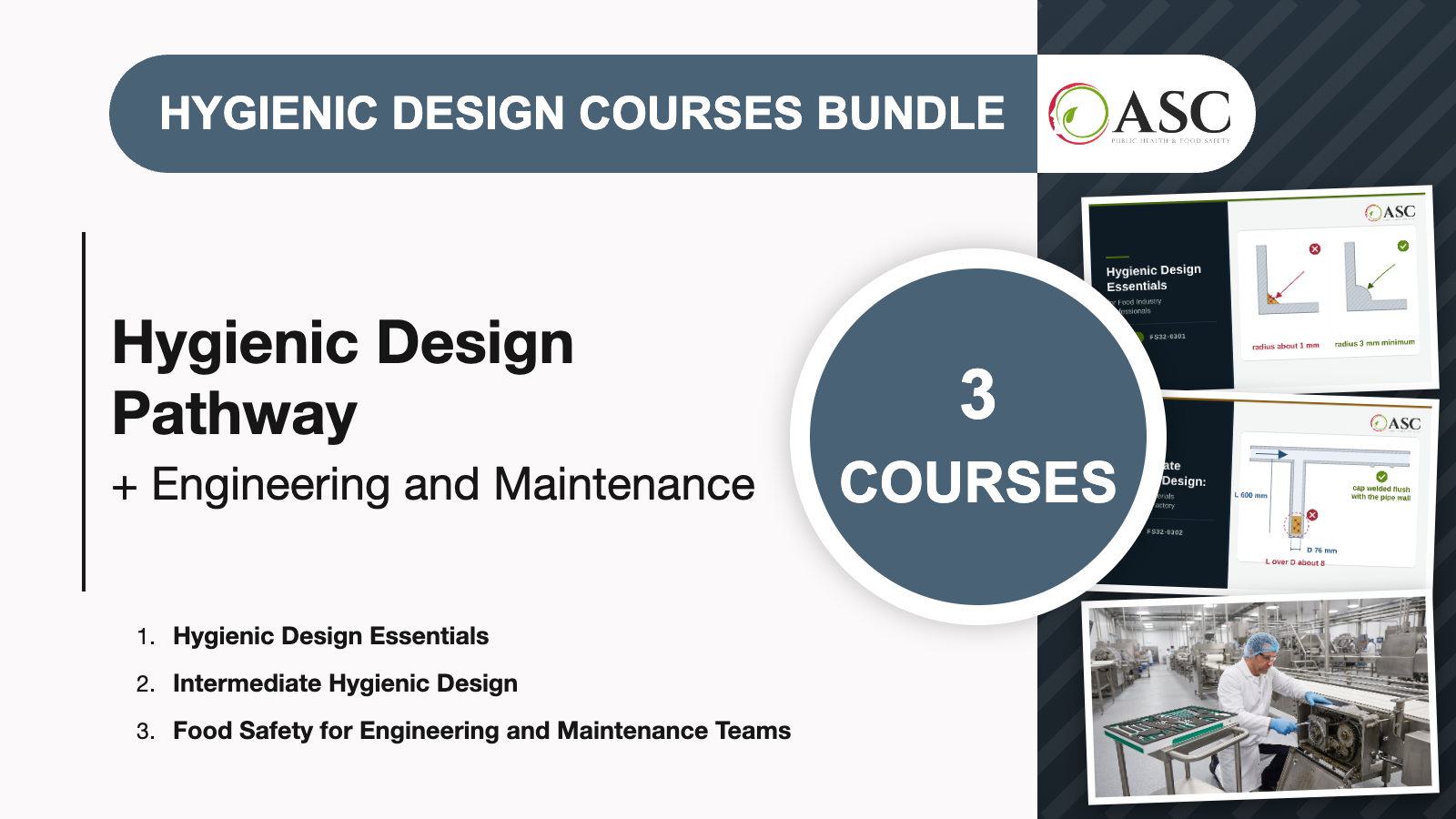
The Hygienic Design Pathway trains QA, engineering and maintenance on the same rules: Essentials for the faults and the walk, Intermediate for materials, welds and the building, and Food Safety for Engineering and Maintenance Teams for everyone who touches the machine afterwards.
Enrol in the Pathway, R6 337 →
Three courses, lifetime access. Saves R1 162 against the three at today’s prices.Gate 3: the SAT, because installation creates new joints
The machine that passed its FAT is not the machine you now own. Installation added site welds done in awkward positions by a different contractor, pipe runs with their own falls and supports, connections to your existing lines, and a physical position that fixes the clearances for cleaning forever. The SAT tests the machine as installed: every site weld gets the same evidence as a factory weld, every run is checked for drainability and dead legs, clearance under and around the machine is measured against the specification, drainage at the new position actually works under hose test, and the interfaces with existing equipment are inspected as new joints, because that is what they are.
This is also the moment to update the drawings and the cleaning instructions to reflect what was actually built. The as installed state, not the proposal, is what your team will clean and your auditor will walk.
Gate 4: prove it cleans, then let it make food
Before first production: run the cleaning regime the machine will live under, prove coverage on closed vessels with a riboflavin test under UV, inspect, and take baseline swabs after the first validated clean. The baseline matters twice over. It confirms the machine starts clean, and it gives your environmental monitoring a reference, so the intensified swabbing you run through the first weeks of production has something honest to be compared against. Early positives on a new line are common, construction debris and disturbed services see to that, and the plants that catch them are the ones that looked.
Then close the gate formally: handover pack checked and filed, punch list closed or risk assessed onto the register with dates, training done, final payment released. The machine enters the plant through a door with a lock, and the lock is yours.
Where this system comes from
The four gate approach is taught, with the checklists and the documents built in workshops, across the ASC hygienic design series. Essentials trains the eye in five hours. Intermediate covers the materials, welds, pipework and the building in nine. Advanced builds the whole lifecycle system in 24 hours at Level 5, from specification through commissioning to the risk register that manages what you already own. Designed with industry leading engineers and technical food safety consultants.
Frequently asked questions
What is a FAT in food manufacturing?
A factory acceptance test: a structured inspection and trial of your equipment at the supplier’s works, against your purchase specification, before it ships. For hygienic design it is the last moment the machine is accessible, apart and surrounded by the people who built it, which makes it the cheapest point in the whole project to find a bad weld, a wrong material or an uncleanable detail.
What is the difference between FAT and SAT?
The FAT happens at the supplier’s factory before dispatch and tests the machine as built. The SAT, the site acceptance test, happens after installation on your floor and tests the machine as installed: the site welds, the pipe runs, the clearances, the drainage, the services and the interfaces to your existing lines. A machine can pass FAT and fail SAT, because installation adds joints and details the factory never saw.
What should be checked at a FAT for hygienic design?
Materials against certificates, surface finish against the specified roughness, welds against the weld map with a borescope sample, drainability by actually wetting surfaces and watching them drain, access for cleaning and inspection, absence of uncleanable details such as exposed threads, hollow sections with openings and unsealed metal to metal overlaps in wet cleaned areas, and a review of the documentation pack. Score it against the specification, in writing, with photographs.
What evidence should come with a new machine at handover?
Material certificates for product contact parts, surface finish confirmation, the weld map, weld log and inspection records, declarations for food contact materials such as gaskets and lubricants, cleaning and maintenance instructions, spare parts of food grade quality, and the completed FAT and SAT records. If the commercial terms link a payment stage to this pack, it arrives. If they do not, you will chase it for a year.
When should a new line be swabbed for the first time?
After installation and the first validated clean, before first production, to establish a microbiological baseline. Follow with intensified swabbing through the first weeks of production, because construction debris, site welds and newly disturbed services are a known source of early positives. A new line that starts dirty spends years proving it.
Can small equipment skip the FAT?
Make it a risk decision rather than a convenience one. A mixer bowl or a small conveyor bought from a catalogue may justify a documented goods in inspection instead of a factory visit. Anything bespoke, anything with CIP, anything post cook or high care deserves the full sequence. The question to ask is what a design fault in this machine would cost to find after start up, and the answer is usually the price of the flight many times over.
The next machine is the cheapest one to get right
Every rand spent on specification and acceptance is repaid every cleaning shift for the life of the line. Train the people who sign.
Essentials, 5 hours, R2 400 Intermediate, 9 hours, R3 700 Advanced, 24 hours, R6 500
Lifetime access and a certificate on every course. Advanced is R6 500 until 30 November, then R7 900. Or take the three course Pathway for R6 337 and save R1 162.Sources and further reading
- How to write an equipment purchase specification that holds up at audit
- Hygienic welding for food equipment
- Hygienic design at audit: FSSC 22000, BRCGS and ISO 22002-1
- EHEDG guidelines overview, ehedg.org
- The ASC hygienic design course series