Selling Food From Home in South Africa: CoA & Training
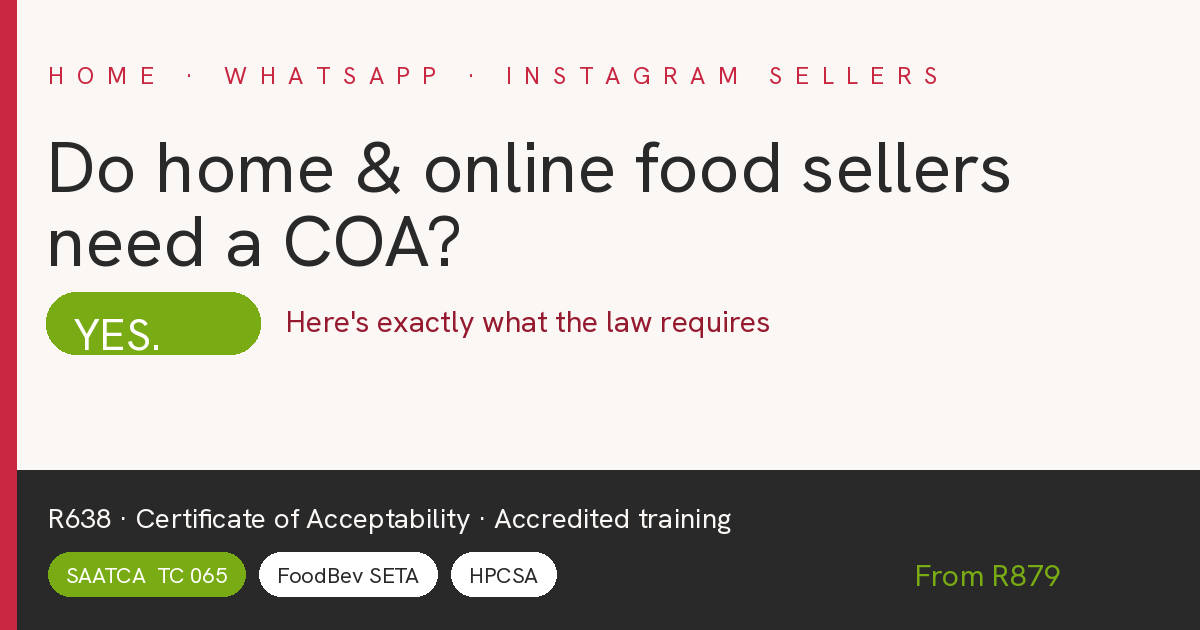
Whether a home based or online food seller needs a Certificate of Acceptability, and why regulation 14(7) turns on payment rather than premises.
Online Food Safety Training Solutions

 ASC Team
Whether a home based or online food seller needs a Certificate of Acceptability, and why regulation 14(7) turns on payment rather than premises.
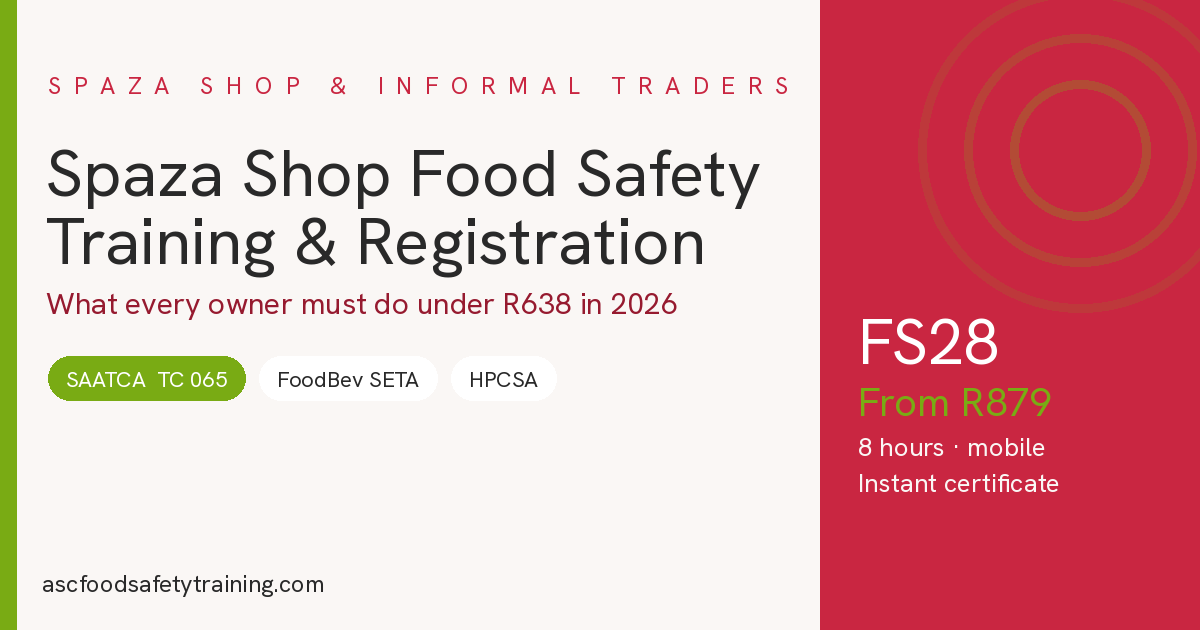
Food safety training and municipal registration for spaza shops and informal traders in South Africa, and the R999 course written for them.
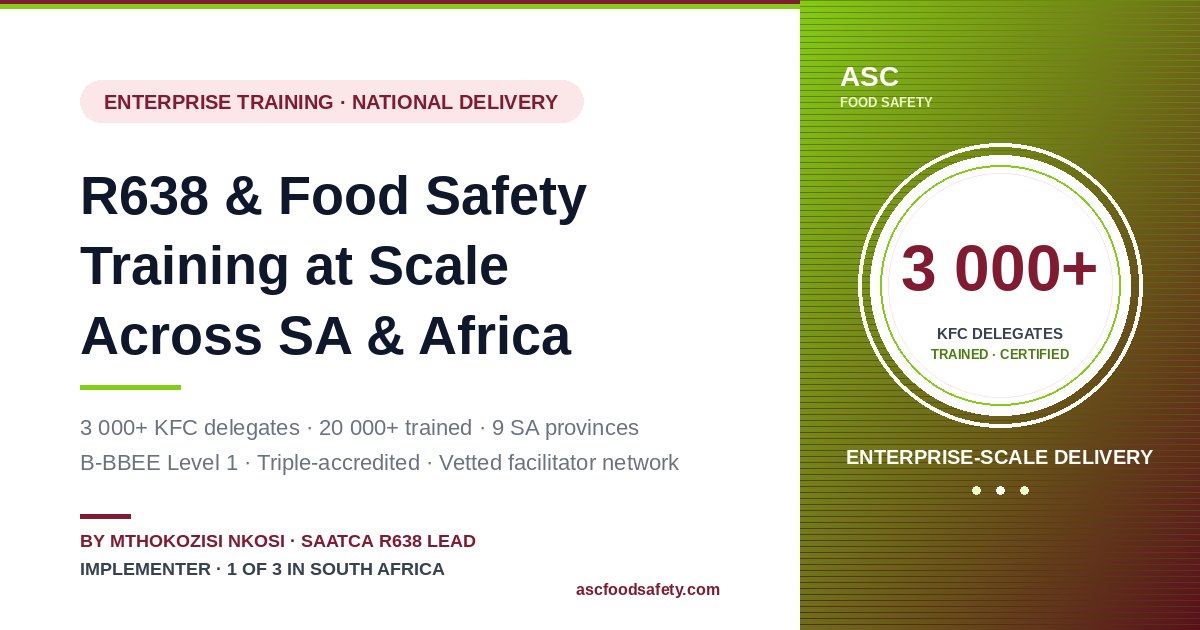
How ASC trains and certifies food safety staff at scale across South Africa, including the manager dashboard, group enrolment and training records.

A module by module walkthrough of the ASC R638 Person in Charge course: what is covered, how the assessment works, and what the certificate proves.
R638 training city by city across all nine provinces, with the local authority that issues your Certificate of Acceptability and how online training fits.
What to check before you buy R638 training: accreditation, assessment, record keeping, and whether the certificate will satisfy your environmental health practitioner.
How the CoA application works in practice across South African municipalities: what each asks for, typical tariffs, and how long the inspection takes.
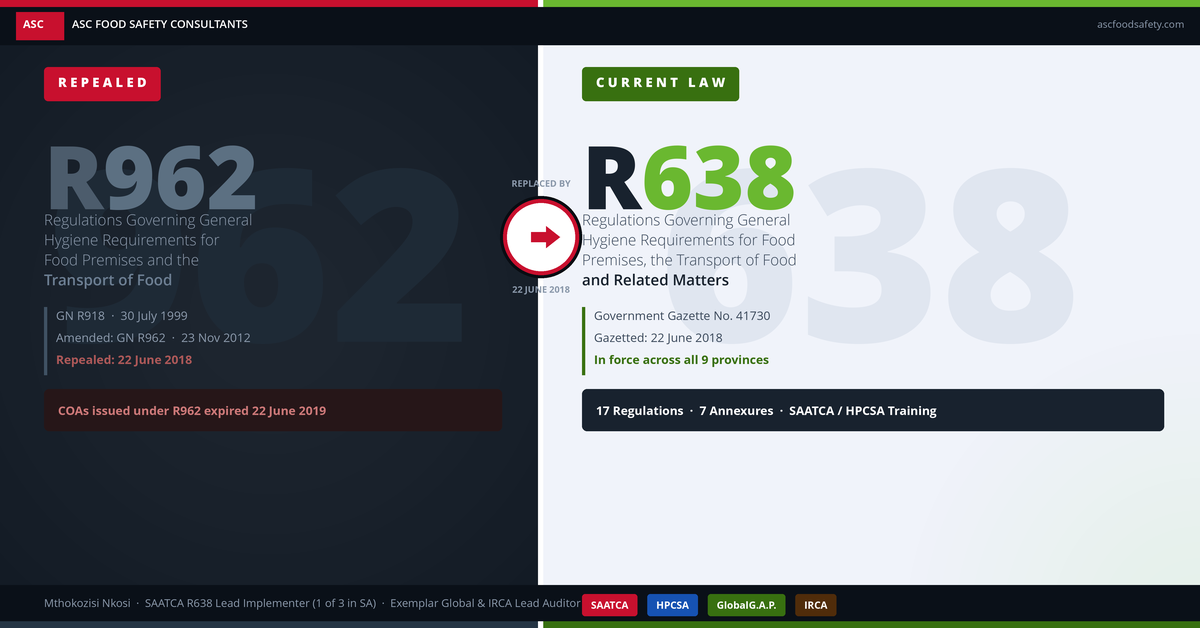
R638 of 2018 replaced R962 of 2012. What actually changed for food premises, the person in charge, training duties and the Certificate of Acceptability.
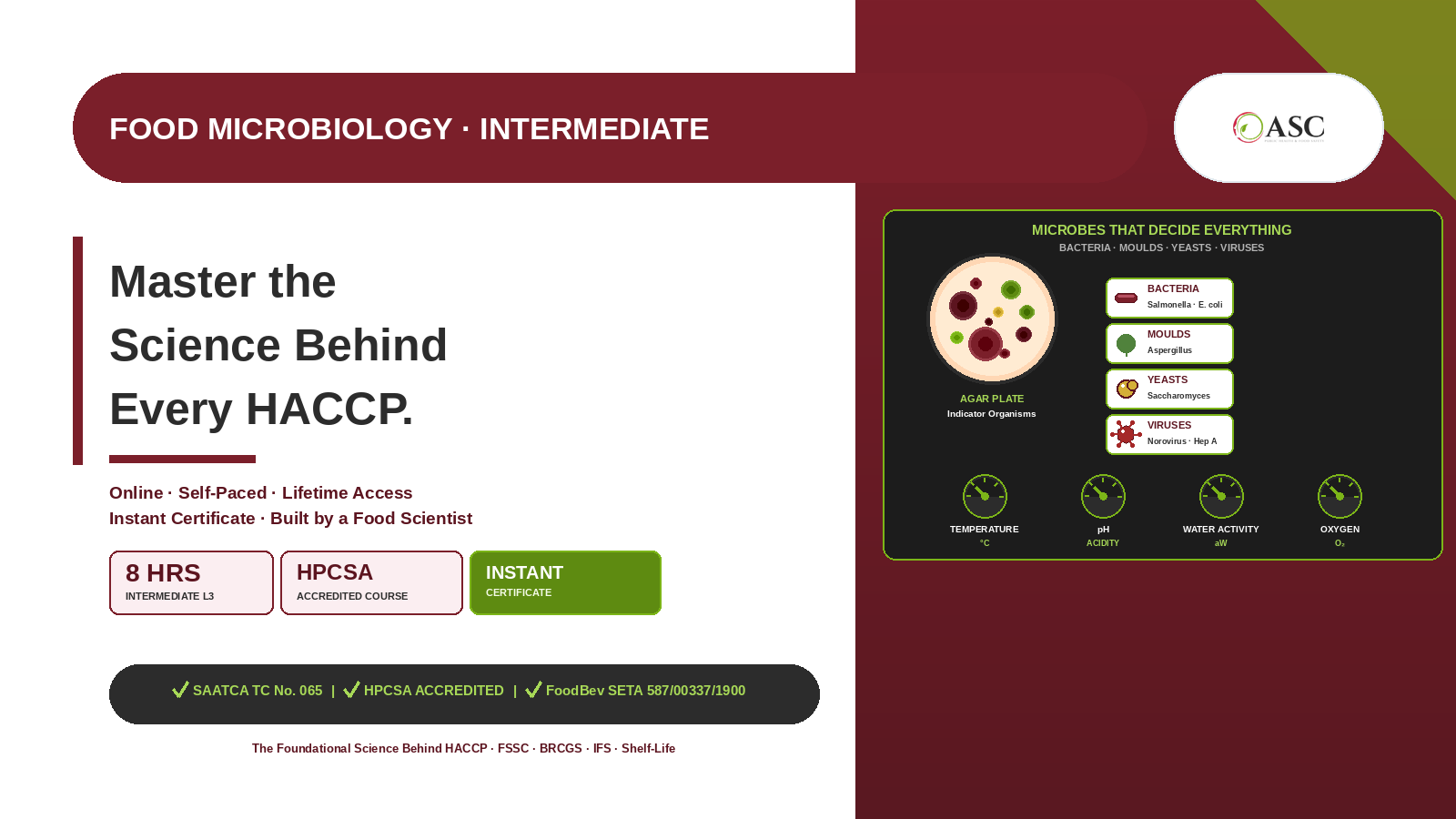
The organisms behind spoilage and foodborne illness, what a micro result actually tells you, and how to read a certificate of analysis without a science degree.
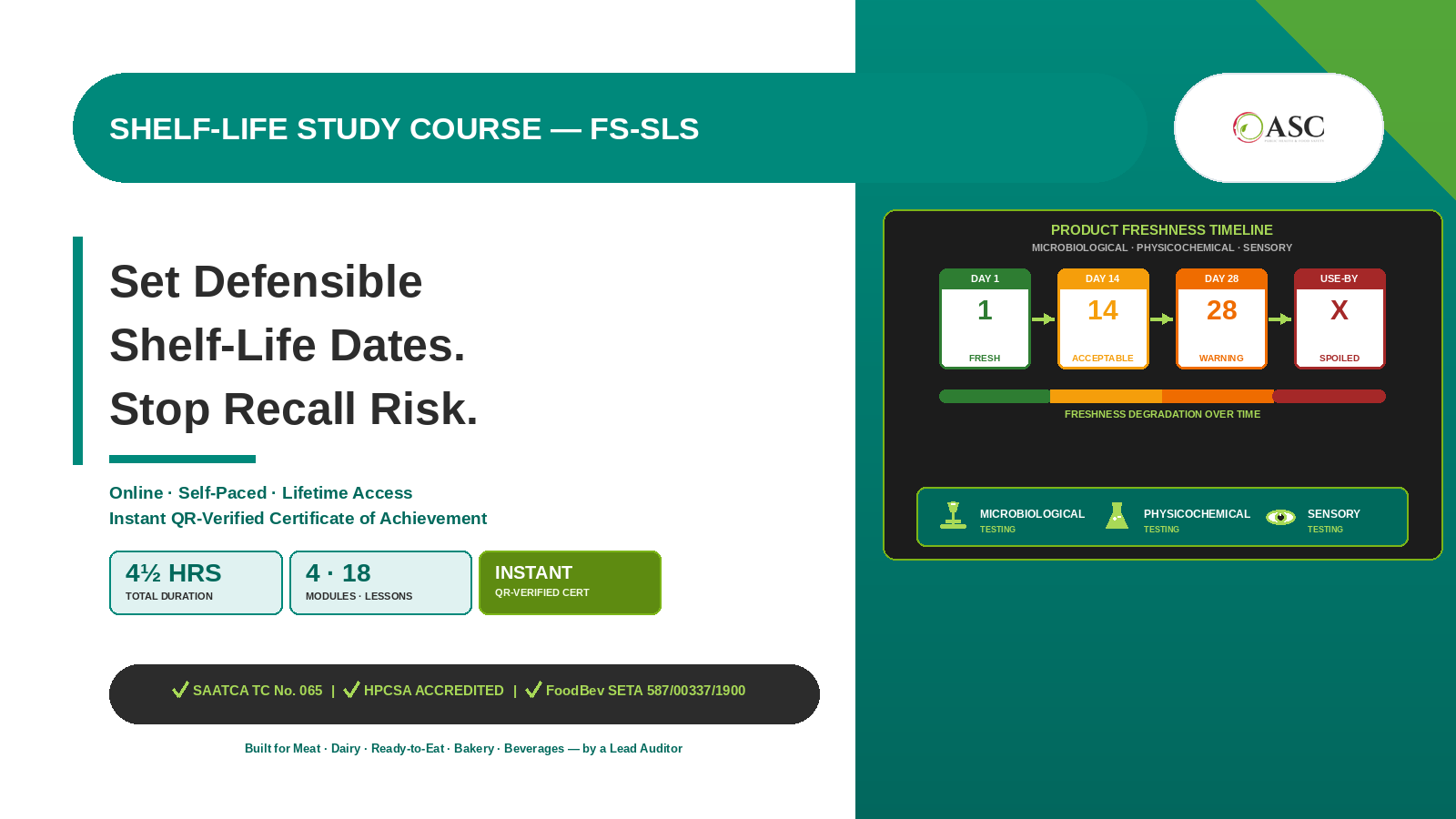
How a shelf life study is designed, run and defended, and the online course that teaches it. Four and a half hours, R799.
Chat with us now, whichever is easiest for you.
Explore ASC services, training information, support pages and compliance resources.